
Introduction
Black raisins are naturally sweet, dried grapes that are commonly enjoyed as a snack or added to everyday meals. Their dark color, chewy texture, and concentrated flavor make them a popular ingredient in many traditional dishes. Besides their natural sweetness, black raisins contain dietary fiber, carbohydrates, potassium, iron, and plant compounds that contribute to their nutritional value.
The black raisins benefits are often discussed in relation to digestive health, nutrient intake, bone health, and antioxidant content. However, their nutritional contribution depends on the serving size and overall eating pattern. Like other dried fruits, black raisins contain concentrated natural sugars and calories, so enjoying them in moderate portions is important.
You can eat black raisins on their own, mix them into oatmeal, add them to yogurt, or soak them in water before eating. Understanding their nutritional profile, potential benefits, appropriate serving sizes, and possible side effects can help you make informed choices about including them in a balanced diet.
In this guide, we explore the nutritional value of black raisins, their potential health benefits, practical ways to eat them, and important precautions to consider.
What Are Black Raisins?
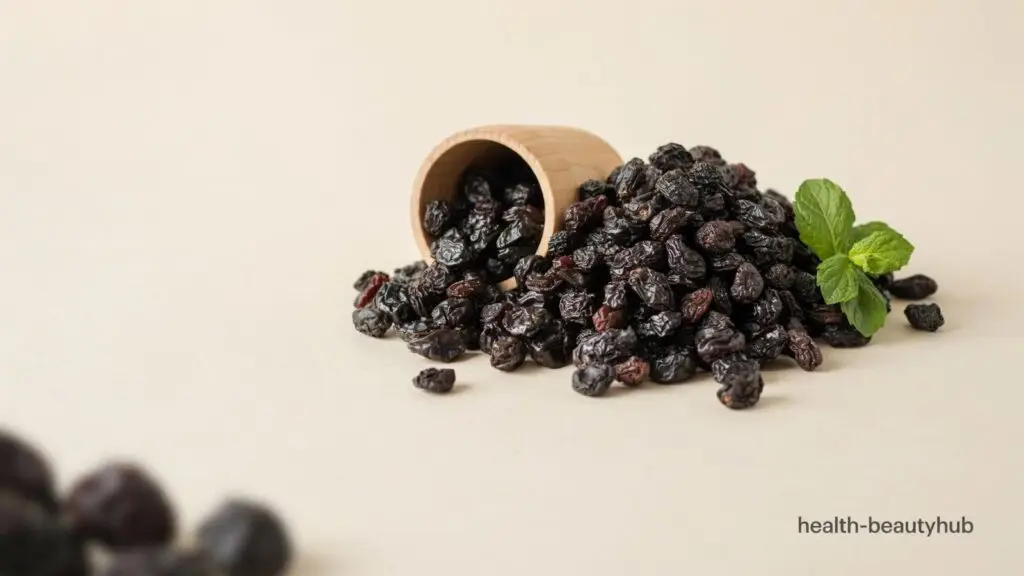
Black raisins are dried grapes that are usually dark purple, deep brown, or nearly black in color. They are made by drying fresh grapes naturally in the sun or through controlled drying methods. During this process, grapes lose most of their water, concentrating their natural sugars and giving black raisins their characteristic sweet taste and chewy texture.
These dried fruits are commonly used in South Asian cuisine and traditional food preparations. They can be enjoyed as a convenient snack or added to oatmeal, yogurt, breakfast cereals, rice dishes, desserts, and homemade trail mixes.
Black raisins contain carbohydrates, dietary fiber, and several minerals, including potassium and iron. They also provide naturally occurring plant compounds, such as polyphenols, which contribute to their nutritional profile. Their nutrient content makes them an interesting addition to a varied and balanced eating pattern.
Some people prefer soaking black raisins in water before eating them, while others enjoy them in their dried form. Both options can be included in everyday meals according to personal preference.
It is also important to distinguish black raisins from munakka. Although both are dried grapes, they may differ in grape variety, size, texture, and seed content. Their nutritional composition can also vary depending on the grape variety and drying process.
Nutritional Value of Black Raisins:
Black raisins contain several nutrients that contribute to their overall nutritional value. Because they are dried grapes, their natural sugars and calories are more concentrated than those in fresh grapes. They also provide dietary fiber, potassium, iron, and small amounts of other minerals.
The exact nutrient content can vary depending on the grape variety, drying method, and serving size. The following table provides an approximate nutritional overview of a 100-gram serving of seedless raisins.
| Nutrient | Approximate Amount |
|---|---|
| Calories | 299 kcal |
| Carbohydrates | 79.3 g |
| Natural sugars | 59.2 g |
| Dietary fiber | 3.7 g |
| Protein | 3.1 g |
| Fat | 0.5 g |
| Potassium | 749 mg |
| Iron | 1.9 mg |
| Calcium | 50 mg |
Understanding the Nutrients in Black Raisins
Calories and carbohydrates: Black raisins provide concentrated energy because most of their water content is removed during drying. Their carbohydrates mainly come from naturally occurring sugars.
Dietary fiber: Fiber contributes to normal digestive function and helps support regular bowel movements when consumed as part of a fiber-rich diet.
Potassium: This mineral plays an important role in normal muscle function, nerve signaling, and fluid balance.
Iron: Iron is needed for hemoglobin production, which helps red blood cells transport oxygen throughout the body. Black raisins provide some dietary iron, although they should not be considered a treatment for iron deficiency.
Calcium: Calcium contributes to normal bone and teeth maintenance and supports several other functions in the body.
Why Serving Size Matters
Although black raisins contain useful nutrients, their calories and natural sugars can add up quickly because they are a dried fruit. A smaller portion can provide flavor and nutrients without adding an unnecessarily large amount of sugar to your daily eating pattern.
For everyday meals, consider adding a small handful to oatmeal, plain yogurt, or homemade trail mix rather than eating large quantities at once.
10 Potential Health Benefits of Black Raisins
Black raisins contain dietary fiber, potassium, iron, and naturally occurring plant compounds that contribute to their nutritional value. Including moderate portions in a varied diet can help increase the intake of these nutrients. However, their benefits should be understood in the context of an overall balanced eating pattern rather than as a treatment for any health condition.
1. May Support Normal Digestive Function
Black raisins provide dietary fiber, which contributes to normal digestive function. Fiber helps add bulk to stool and supports regular bowel movements. Including fiber-containing foods such as fruits, vegetables, whole grains, and dried fruits in everyday meals can help maintain digestive regularity.
Black raisins can be added to oatmeal, yogurt, or whole-grain breakfast cereals to increase the fiber content of a meal. Drinking enough water and eating a variety of fiber-rich foods are also important for digestive health.
2. Provide Dietary Fiber for a Balanced Diet
Dietary fiber is an important part of healthy eating because it supports digestion and contributes to fullness after meals. Black raisins contain both soluble and insoluble fiber, although the exact amounts can vary with the grape variety and processing method.
Adding a small portion to breakfast or a homemade snack can help increase daily fiber intake. However, black raisins should be combined with other fiber-rich foods rather than used as the only source of dietary fiber.
3. Contribute to Daily Iron Intake
Iron is an essential mineral involved in hemoglobin production. Hemoglobin is a protein in red blood cells that carries oxygen throughout the body.
Black raisins contain a modest amount of plant-based iron, making them one of several foods that can contribute to daily iron intake. Since plant-based iron is generally less readily absorbed than iron from animal foods, combining iron-containing foods with vitamin C sources such as oranges, tomatoes, or bell peppers can help improve iron absorption.
However, black raisins alone cannot prevent or treat iron-deficiency anemia.
4. Provide Naturally Occurring Antioxidants
Black raisins contain plant compounds, including polyphenols and other phenolic substances. These compounds have antioxidant properties that can help protect cells from oxidative damage under laboratory conditions.
The amount and type of these compounds may differ according to grape variety, growing conditions, and drying methods. Including a variety of colorful fruits, vegetables, nuts, and other plant foods is a practical way to obtain different antioxidant compounds through the diet.
5. Supply Potassium for Normal Body Functions
Potassium is an essential mineral that supports normal nerve signaling, muscle contraction, and fluid balance. It also contributes to maintaining healthy blood pressure as part of an overall balanced diet.
Black raisins provide potassium, although the amount depends on the serving size. Other dietary sources include bananas, potatoes, beans, leafy vegetables, and yogurt.
People who have been advised to limit potassium intake because of certain medical conditions should follow their healthcare professional’s dietary guidance.
6. Contribute Nutrients That Support Bone Health
Black raisins provide small amounts of minerals such as calcium and potassium, which contribute to normal body functions related to bone maintenance.
Calcium is necessary for maintaining strong bones and teeth, while potassium is involved in several processes that help maintain normal body function. However, black raisins are not a major calcium source and should not replace foods such as milk, yogurt, fortified plant beverages, or other calcium-rich options.
7. Offer a Convenient Source of Natural Energy
The natural sugars and carbohydrates in black raisins provide energy for everyday activities. Because drying removes much of the water from grapes, raisins contain more concentrated carbohydrates per gram than fresh grapes.
A small portion can be a convenient snack during a busy day or before physical activity. Pairing them with nuts or plain yogurt can also provide protein and healthy fats, making the snack more balanced and satisfying.
8. Add Plant Compounds to a Heart-Healthy Eating Pattern
Black raisins contain polyphenols and potassium, which are relevant to overall nutritional health. Potassium contributes to normal blood pressure regulation, while plant compounds are part of the wider nutritional profile of fruits and vegetables.
Including moderate portions of dried fruit alongside vegetables, whole grains, legumes, nuts, and other nutrient-rich foods can contribute to a varied eating pattern. However, eating black raisins alone has not been established as a way to prevent or treat heart disease.
9. Provide Small Amounts of Essential Minerals
In addition to potassium, black raisins contain smaller amounts of minerals such as iron, calcium, and magnesium. These nutrients participate in several important functions, including oxygen transport, bone maintenance, muscle function, and normal energy metabolism.
Although their mineral content adds to their nutritional value, black raisins should be combined with a range of other foods to meet daily nutrient requirements.
10. Offer an Alternative to Some Processed Sweet Snacks
Black raisins have a naturally sweet flavor and can be used in place of some highly processed sweet snacks. They can add sweetness to oatmeal, homemade energy bites, yogurt, and breakfast cereals without requiring additional refined sugar.
Unlike many confectionery snacks, black raisins also provide dietary fiber and minerals. However, they still contain concentrated natural sugars and calories, so portion awareness remains important.
Soaked vs. Unsoaked Black Raisins: Which Is Better?
Soaking dried grapes in water is a common food preparation practice. Some people prefer this method because it makes the fruit softer and easier to chew, while others enjoy eating them directly from the package. Both options can fit into a balanced diet, and the choice largely depends on personal preference.
What Happens When You Soak Raisins?
When raisins are placed in water, they absorb some moisture and become softer and plumper. This can make them easier to chew, particularly for people who prefer a softer texture.
Soaking does not create new nutrients or automatically increase the fruit’s nutritional value. Some water-soluble compounds may also move into the soaking water, depending on the soaking conditions and duration.
Potential Advantages of Soaked Raisins
- Softer texture: Moisture makes the fruit easier to chew.
- Convenient preparation: Soaking overnight allows you to prepare a snack in advance.
- Easy meal addition: Softened raisins can be mixed into oatmeal, yogurt, or breakfast bowls.
- More hydration in the fruit: The absorbed water increases moisture content but does not add nutritional value.
Are Unsoaked Raisins Also Healthy?
Yes. Unsoaked raisins retain their nutritional value and provide carbohydrates, fiber, and minerals. They are also convenient to carry and can be eaten without additional preparation.
How to Soak Raisins Safely
- Take a small portion of clean, good-quality raisins.
- Rinse them under clean running water.
- Place them in a clean glass or food-safe bowl.
- Add enough drinking water to cover the fruit.
- Cover the bowl and refrigerate overnight.
- Eat the softened fruit the following day.
If you prefer, you can also use the soaking water in a smoothie or another food preparation, provided it has been handled and stored safely.
Which Option Should You Choose?
Neither soaked nor unsoaked raisins are universally better. Soaking mainly changes their texture and moisture content rather than providing a proven nutritional advantage. Choose the preparation method you enjoy and pay attention to portion size.
How to Eat Raisins: 7 Easy Ways
Raisins are easy to include in everyday meals because they have a naturally sweet flavor and a chewy texture. They can be enjoyed on their own or combined with other ingredients to add sweetness, fiber, and variety to different dishes.
Here are seven practical ways to enjoy them as part of a balanced eating pattern.
1. Add Them to Oatmeal
Mix a small portion of raisins into warm oatmeal while cooking or sprinkle them over your prepared bowl. They add natural sweetness and pair well with cinnamon, chopped apples, walnuts, or almonds.
2. Mix Them Into Plain Yogurt
Add raisins to plain yogurt for a simple breakfast or snack. You can also include fresh fruit, seeds, or a few nuts to create a more balanced combination.
3. Combine Them With Nuts and Seeds
Prepare a homemade trail mix using raisins, almonds, pistachios, walnuts, pumpkin seeds, and sunflower seeds. This combination offers different nutrients and textures and can be packed for a convenient snack.
4. Include Them in Breakfast Cereals
Sprinkle a small amount over whole-grain cereal or homemade granola. Their sweetness can add flavor without requiring extra table sugar.
5. Use Them in Rice Dishes
Raisins can add a sweet contrast to savory rice dishes, vegetable pulao, and some traditional recipes. Use a modest quantity so their sweetness complements rather than overpowers the other ingredients.
6. Add Them to Homemade Baked Foods
You can mix raisins into homemade whole-grain muffins, bread, or oatmeal cookies. Adjust the amount of added sugar in the recipe because the fruit already contributes natural sweetness.
7. Blend Them Into Smoothies
Add a small portion to a smoothie with milk or an unsweetened alternative, banana, and oats. Soaking them beforehand can make blending easier and produce a smoother texture.
A Simple Portion Tip
Although raisins provide fiber and minerals, they are also concentrated in natural sugars and calories. Start with a small handful and consider pairing them with protein-rich foods or nuts. Choose unsweetened products and check ingredient labels when buying packaged dried fruit.
How Many Raisins Should You Eat Daily?
The appropriate amount of raisins to eat each day depends on your overall diet, energy needs, and individual nutritional requirements. Since drying removes most of the water from grapes, raisins contain more concentrated natural sugars and calories in a smaller volume than fresh grapes.
A small portion of around one ounce (28 grams) is a practical serving for many adults. This is approximately a small handful, although the actual number of raisins can vary depending on their size.
Choosing a suitable portion can help you include dried fruit as part of a [balanced diet].
What Does a 28-Gram Serving Provide?
A 28-gram serving of ordinary seedless raisins provides approximately:
| Nutrient | Approximate Amount |
|---|---|
| Calories | 85 kcal |
| Carbohydrates | 22 g |
| Natural sugars | 17 g |
| Dietary fiber | 1 g |
| Potassium | 210 mg |
| Iron | 0.5 mg |
These values are approximate and can vary depending on the variety and product.
Should You Eat Raisins Every Day?
Raisins can be included in daily meals if they fit your nutritional needs and overall eating pattern. However, eating them every day is not necessary to maintain a balanced diet.
Consider these practical tips:
- Watch your portion: A small handful is generally easier to fit into a balanced eating pattern than eating directly from a large packet.
- Combine with other foods: Pair them with plain yogurt, nuts, or oatmeal for a more varied snack.
- Consider natural sugar content: If you are monitoring your carbohydrate or sugar intake, include their nutritional contribution in your daily food choices.
- Choose unsweetened options: Check product labels and avoid varieties with added sugar when possible.
Do Children Need the Same Serving Size?
Children do not necessarily need the same portion as adults. Their serving size should reflect their age, appetite, activity level, and overall diet. For younger children, raisins should be prepared in an age-appropriate way because small, chewy foods may present a choking risk. Follow suitable food-safety guidance for your child’s age and eating abilities.
A Balanced Approach to Daily Portions
There is no single daily amount that is right for everyone. A small portion can add flavor and nutrients to meals, while variety remains important. Include different fruits, vegetables, whole grains, protein sources, and other nutrient-rich foods rather than relying on one dried fruit for your nutritional needs.
Possible Side Effects and Precautions of Black Raisins
Although black raisins can be a convenient addition to a balanced diet, eating large quantities may not suit everyone. They contain concentrated natural sugars, calories, and dietary fiber, so portion size and individual dietary needs are worth considering.
1. High Natural Sugar Content
Black raisins contain naturally occurring sugars that become concentrated when grapes are dried. Eating large portions may increase overall sugar and calorie intake. People who monitor their blood glucose or carbohydrate intake should consider portion size and follow their healthcare professional’s dietary advice.
2. Digestive Discomfort
Raisins provide dietary fiber, but suddenly eating a large amount may cause bloating, gas, or abdominal discomfort in some people. Increasing fiber intake gradually and drinking enough water can help support normal digestion.
3. Extra Calorie Intake
Because dried fruit contains less water than fresh fruit, a small serving can provide a relatively concentrated amount of energy. Frequent large portions may add more calories than intended, particularly when combined with other sweet foods.
4. Dental Health Considerations
Their sticky texture and natural sugars mean that raisins can cling to teeth. Eating them as part of a meal rather than frequently throughout the day, maintaining regular oral hygiene, and brushing with fluoride toothpaste can help support dental health.
5. Individual Sensitivities
Some people may experience an unwanted reaction after eating a particular food. If you notice symptoms such as itching, swelling, or difficulty breathing, seek appropriate medical attention. Difficulty breathing or swelling of the throat requires emergency care.
Who Should Pay Attention to Portion Size?
- People monitoring blood glucose: Consider the carbohydrate content and serving size when planning meals.
- People managing calorie intake: Measure a small portion instead of eating directly from the packet.
- People with digestive sensitivity: Start with a modest amount and notice how your body responds.
- People following a potassium-restricted diet: Ask a healthcare professional whether dried fruit fits your individual dietary plan.
How to Enjoy Them More Mindfully
Choose plain, unsweetened products and check the ingredient label for added sugars. Store dried fruit in a clean, sealed container and follow the package’s storage instructions. Keeping portions moderate and including a variety of fresh and dried fruits can help maintain a balanced eating pattern.
Black raisins can provide fiber and minerals, but they are not a substitute for a varied diet or professional dietary guidance.
Black Raisins vs. Golden Raisins vs. Munakka
Black raisins, golden raisins, and munakka are all dried grape products, but they can differ in grape variety, appearance, size, texture, and processing methods. Understanding these differences can help you choose an option that suits your taste and everyday food preferences.
Comparison of Black Raisins, Golden Raisins, and Munakka
| Feature | Black Raisins | Golden Raisins | Munakka |
|---|---|---|---|
| Appearance | Dark purple, brown, or nearly black | Golden yellow or amber | Usually larger and dark-colored |
| Texture | Soft to chewy | Often soft and slightly moist | Generally larger and chewier |
| Taste | Naturally sweet with a rich flavor | Sweet with a mild, sometimes tangy flavor | Sweet and often fuller in flavor |
| Grape variety | Depends on the variety used | Often made from light-colored grapes | Depends on the grape variety |
| Seeds | Seedless or seeded varieties | Usually seedless | Often contains seeds |
| Common uses | Snacks, desserts, cereals, and rice dishes | Baking, salads, cereals, and desserts | Traditional food preparations and snacks |
Are Their Nutritional Values the Same?
Not necessarily. All three products can provide carbohydrates, natural sugars, and some dietary fiber. However, their nutrient content may vary according to grape variety, seed content, drying technique, and serving size.
Golden raisins may undergo different processing methods to maintain their lighter color. Some products may also contain preservatives, so checking the ingredient label is useful.
Munakka is often larger than ordinary raisins and may contain seeds. Its nutritional composition should not automatically be assumed to be identical to that of seedless raisins.
Which One Should You Choose?
Your choice can depend on taste, texture, availability, and how you plan to use the dried fruit.
- Choose black raisins if you prefer a darker-colored dried fruit for everyday snacks, oatmeal, or traditional dishes.
- Choose golden raisins if you like a lighter-colored option for baking, salads, or breakfast cereals.
- Choose munakka if you prefer larger dried grapes, including varieties that contain seeds.
Can You Include All Three in Your Diet?
Yes. You can enjoy different dried grape varieties in moderate portions as part of a varied eating pattern. Compare product labels, look for added ingredients, and remember that dried fruits contain concentrated natural sugars and calories.
No single variety is universally better. The most suitable choice is the one that fits your food preferences and nutritional needs.
Conclusion
Black raisins are a naturally sweet dried fruit that provides dietary fiber, potassium, iron, and other plant compounds. Their versatility makes them easy to include in breakfast meals, snacks, smoothies, and traditional recipes.
The potential benefits of black raisins are best understood as part of a varied and balanced diet, not as a treatment for any health condition. Pay attention to portion size because dried fruit contains concentrated natural sugars and calories. Whether you enjoy them soaked or unsoaked, choose plain varieties and combine them with other nutrient-rich foods.
A balanced eating pattern, variety, and mindful portions are more important than relying on any single food for overall nutritional well-being.
FAQs
1. What Are Black Raisins Good For?
They provide dietary fiber, potassium, iron, and plant compounds that can contribute to nutrient intake as part of a balanced diet.
2. Is It Better to Eat Raisins Soaked or Unsoaked?
Both options are suitable. Soaking mainly softens their texture and increases moisture content; it does not provide a proven nutritional advantage.
3. Can You Eat Raisins Every Day?
Yes, a small portion can fit into many people’s daily eating patterns. However, portion size matters because dried fruit contains concentrated natural sugars and calories.
4. Do Raisins Contain Iron?
Yes, raisins provide some plant-based iron. However, their iron content is modest, and they should not be considered a treatment for iron deficiency.
5. Are Raisins Suitable for Children?
Children can generally eat age-appropriate portions. For younger children, prepare them according to their chewing and swallowing abilities to reduce choking risks.

I am a professional SEO content writer with over 4 years of experience in creating high-quality content in the health and beauty niche. I specialize in writing research-based, easy-to-understand articles that help readers improve their skincare, wellness, and daily lifestyle.
My goal is to provide accurate, practical, and user-friendly information so readers can make informed decisions about their health and beauty routines.
Note: The information provided is for educational purposes only and should not be considered medical advice.