
Introduction
Broccoli has long been considered one of the healthiest vegetables, and for good reason. It is packed with vitamins, minerals, antioxidants, and dietary fiber that support overall health. However, if your goal is to increase your daily fiber intake, broccoli is not the only vegetable worth adding to your plate. In fact, several vegetables contain even more fiber while offering their own unique nutrients and health benefits.
Dietary fiber plays an important role in maintaining a healthy digestive system, supporting regular bowel movements, promoting a balanced gut microbiome, and helping you feel full for longer. A diet rich in fiber may also support heart health, healthy blood sugar levels, and overall well-being when combined with other healthy lifestyle habits.
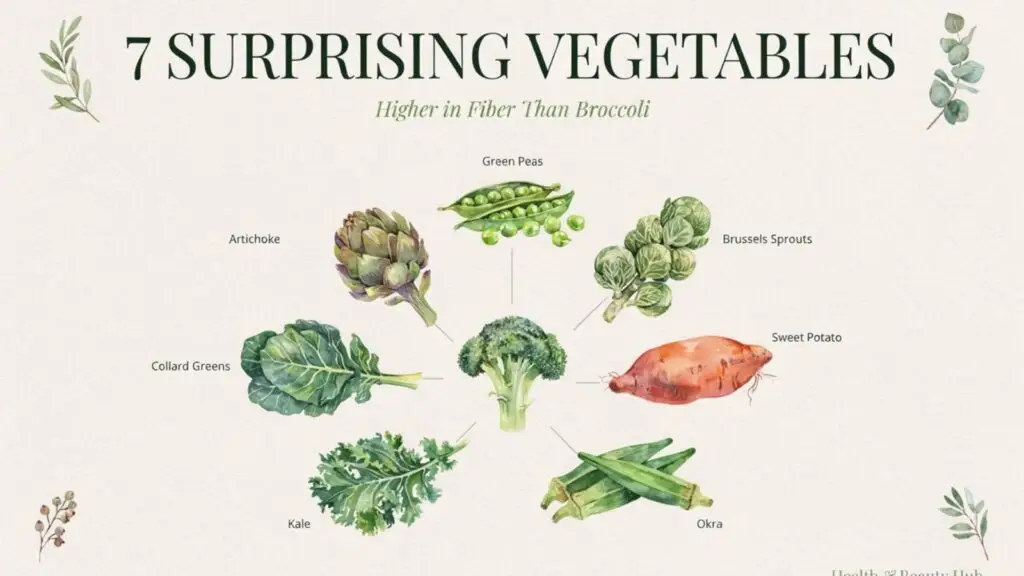
In this guide, you’ll discover 7 surprising vegetables higher in fiber than broccoli, along with their fiber content, nutritional highlights, and simple ways to enjoy them in everyday meals. Remember, the goal is not to replace broccoli but to include a wider variety of fiber-rich vegetables in your diet for better nutrition and long-term health.
Quick Comparison: 7 Vegetables Higher in Fiber Than Broccoli
| Vegetable | Fiber (per 100g) | Why It’s Worth Adding |
|---|---|---|
| Green Peas | 5.7 g | Rich in fiber, plant protein, and antioxidants |
| Artichokes | 5.7 g | Excellent source of prebiotic fiber |
| Brussels Sprouts | 4.8 g | Supports gut and immune health |
| Collard Greens | 4.0 g | High in fiber, vitamin K, and calcium |
| Kale | 4.1 g | Packed with antioxidants and vitamins |
| Okra | 3.2 g | Contains soluble fiber that supports digestion |
| Sweet Potatoes | 3.0 g | Provides fiber, vitamin A, and potassium |
| Broccoli (for comparison) | 2.4 g | Nutritious vegetable with moderate fiber |
Quick Tip: Fiber values may vary slightly depending on the variety, growing conditions, and cooking method.
Why Fiber Is Important for Your Health
Fiber does much more than support regular bowel movements. It is an important part of a balanced diet and contributes to many aspects of overall health. Including vegetables higher in fiber than broccoli along with other fiber-rich foods each week is one of the simplest ways to increase your daily fiber intake naturally.
Supports Healthy Digestion
Dietary fiber helps food move through the digestive tract more efficiently and promotes regular bowel movements. It also helps maintain a healthy balance of beneficial bacteria in the gut, which plays an important role in digestive health.
Helps You Feel Full Longer
Foods rich in fiber take longer to digest than low-fiber foods. This can help you stay satisfied after meals and may reduce unnecessary snacking throughout the day.
Supports Heart Health
Some types of soluble fiber may help maintain healthy cholesterol levels already within the normal range. A fiber-rich eating pattern is also associated with overall cardiovascular wellness.
Helps Maintain Healthy Blood Sugar
Fiber slows the digestion and absorption of carbohydrates, helping support steady blood sugar levels as part of a balanced diet.
Nourishes the Gut Microbiome
Many vegetables higher in fiber than broccoli also contain prebiotic fibers that serve as food for beneficial gut bacteria. A healthy gut microbiome supports digestion and contributes to overall well-being
Practical Tip: Start by adding one serving of vegetables higher in fiber than broccoli to your daily meals, and drink plenty of water throughout the day. Gradually increasing your fiber intake may help reduce temporary bloating or digestive discomfort.
Is Broccoli Still a Healthy Choice?
Absolutely. Although this article highlights vegetables higher in fiber than broccoli, broccoli remains one of the most nutritious vegetables you can include in a balanced diet. It provides a variety of essential vitamins, minerals, and plant compounds that support overall health.
Broccoli is an excellent source of vitamin C, which supports the immune system and helps protect cells from oxidative stress. It also provides vitamin K for normal bone health, folate for healthy cell function, and potassium, an important mineral that helps maintain normal muscle and nerve function. In addition, broccoli contains antioxidants such as sulforaphane and lutein, which help protect the body from damage caused by free radicals.
The purpose of this article is not to compare the overall nutritional value of vegetables or suggest replacing broccoli. Instead, it focuses specifically on fiber content. If you’re trying to increase your daily fiber intake, adding vegetables that naturally contain more fiber than broccoli can help you enjoy greater variety while still benefiting from broccoli’s impressive nutritional profile.
Practical Tip: Instead of choosing one vegetable over another, fill your plate with a variety of colorful vegetables throughout the week to enjoy a wider range of nutrients and dietary fiber.
1. Green Peas
Green peas may be small, but they are one of the best vegetables higher in fiber than broccoli. A 100-gram serving provides approximately 5.7 grams of dietary fiber, which is more than double the fiber found in the same amount of broccoli. This makes green peas an excellent choice for people looking to increase their daily fiber intake through whole foods.
In addition to fiber, green peas are rich in plant-based protein, vitamin C, vitamin K, folate, manganese, and antioxidants such as lutein and zeaxanthin. They also contain both soluble and insoluble fiber, helping support healthy digestion while nourishing beneficial gut bacteria. The combination of fiber and protein may also help you feel satisfied after meals, making green peas a nutritious addition to a balanced eating pattern.
One of the best things about green peas is their versatility. Fresh, frozen, or lightly steamed peas can be added to soups, salads, rice dishes, pasta, stir-fries, and vegetable curries. They also blend well into mixed vegetable dishes, making it easy to increase your fiber intake without changing the flavor of your meals.
Practical Tip: Keep a bag of frozen green peas in your freezer. They cook in just a few minutes and can be added to many everyday meals for a quick fiber and nutrient boost.
2. Artichokes
Artichokes are among the vegetables higher in fiber than broccoli, providing approximately 5.7 grams of fiber per 100 grams. This impressive fiber content makes them an excellent choice for people who want to support healthy digestion while increasing their daily fiber intake through whole foods.
Besides being rich in fiber, artichokes provide important nutrients such as vitamin C, vitamin K, folate, magnesium, and potassium. They are also one of the best natural sources of inulin, a type of prebiotic fiber that helps nourish beneficial gut bacteria. A healthy gut microbiome plays an important role in digestion and overall well-being. In addition, artichokes contain antioxidants like cynarin and chlorogenic acid, which help protect cells from oxidative stress.
Although fresh artichokes require some preparation, canned or frozen artichoke hearts make them much easier to enjoy. Add them to salads, whole-grain pasta, vegetable pizzas, grain bowls, or roasted vegetable dishes for extra flavor and fiber. They also pair well with olive oil, garlic, and herbs.
Practical Tip: Choose canned artichoke hearts packed in water rather than heavy sauces. Rinse them before use to reduce excess sodium and enjoy a simple, fiber-rich addition to your meals.
3. Brussels Sprouts
Brussels sprouts are another excellent choice if you’re looking for vegetables higher in fiber than broccoli. A 100-gram serving provides about 4.8 grams of dietary fiber, making Brussels sprouts a nutritious option for increasing your daily fiber intake. They contain a balanced mix of soluble and insoluble fiber, which supports healthy digestion and helps maintain a healthy gut microbiome.
Beyond their fiber content, Brussels sprouts are rich in vitamin C, vitamin K, folate, manganese, and antioxidants. As a member of the cruciferous vegetable family, they also contain natural plant compounds called glucosinolates, which help protect cells from oxidative stress. Their combination of vitamins, minerals, and antioxidants makes them a valuable addition to a balanced diet.
Brussels sprouts are incredibly versatile and can be prepared in several delicious ways. Roasting them with olive oil and herbs brings out their natural sweetness, while steaming or air-frying helps preserve their texture and nutrients. You can also add shredded Brussels sprouts to fresh salads, grain bowls, pasta dishes, or stir-fries for extra flavor and fiber.
Practical Tip: Avoid overcooking Brussels sprouts, as prolonged boiling may reduce some heat-sensitive nutrients. Roasting or steaming them lightly is a simple way to enjoy their flavor while retaining more of their nutritional value.
4. Collard Greens
Collard greens are among the vegetables higher in fiber than broccoli, providing approximately 4 grams of dietary fiber per 100 grams. These leafy greens are an excellent choice for people who want to increase their daily fiber intake while enjoying a variety of essential nutrients. They contain both soluble and insoluble fiber, which helps support healthy digestion and regular bowel movements as part of a balanced diet.
In addition to their fiber content, collard greens are an excellent source of vitamin K, vitamin A, vitamin C, folate, calcium, and potassium. They also provide antioxidants such as beta-carotene and lutein, which help protect cells from oxidative stress. Their rich nutrient profile makes collard greens a valuable addition to meals that support overall health and wellness.
Collard greens are easy to include in everyday cooking. They can be lightly sautéed with garlic and olive oil, added to soups and stews, mixed into vegetable curries, or chopped into grain bowls and salads. Their sturdy leaves also work well as a healthy wrap for vegetables, lean proteins, or whole grains.
Practical Tip: Remove the thick stems before cooking, as they can be tough. Lightly steaming or sautéing collard greens helps preserve their texture and nutrients while making them easier to enjoy.
5. Sweet Potatoes
Sweet potatoes are another excellent option among vegetables higher in fiber than broccoli. A 100-gram serving contains approximately 3 grams of dietary fiber, while one medium sweet potato with the skin provides nearly 4 grams of fiber. They contain a combination of soluble and insoluble fiber, making them a nutritious choice for supporting healthy digestion and helping you meet your daily fiber needs.
In addition to fiber, sweet potatoes are rich in vitamin A (from beta-carotene), vitamin C, potassium, manganese, and vitamin B6. Their bright orange color comes from beta-carotene, an antioxidant that the body converts into vitamin A, which supports normal vision, immune function, and healthy skin. Sweet potatoes also provide complex carbohydrates that supply steady energy as part of a balanced diet.
One of the best things about sweet potatoes is their versatility. They can be baked, roasted, steamed, air-fried, or mashed and served as a nutritious side dish. You can also add them to soups, grain bowls, salads, or breakfast dishes for extra flavor, fiber, and natural sweetness.
Practical Tip: Enjoy sweet potatoes with the skin whenever possible, as much of their fiber is found in or just beneath the skin. Wash them thoroughly before cooking to get the most nutritional value.
6. Kale
Kale is one of the most nutrient-dense vegetables higher in fiber than broccoli, offering approximately 4.1 grams of dietary fiber per 100 grams. Its fiber content, combined with an impressive range of vitamins and antioxidants, makes kale a smart addition to a balanced diet. The mix of soluble and insoluble fiber supports healthy digestion, promotes regular bowel movements, and contributes to a healthy gut microbiome.
Beyond fiber, kale is an excellent source of vitamin K, vitamin A, vitamin C, folate, calcium, and potassium. It also contains antioxidants such as lutein, zeaxanthin, and quercetin, which help protect cells from oxidative stress. These nutrients support overall wellness and make kale one of the most nutritious leafy greens available.
Kale can be enjoyed in many different ways. Add fresh leaves to salads, blend them into smoothies, stir them into soups, or lightly sauté them with garlic and olive oil as a simple side dish. You can also bake kale leaves into crispy chips or mix chopped kale into pasta, grain bowls, and vegetable omelets for an easy fiber boost.
Practical Tip: Massage raw kale with a small amount of olive oil or lemon juice before adding it to salads. This softens the leaves, improves their texture, and makes them more enjoyable to eat.
7. Okra
Okra, also known as lady’s finger, is one of the vegetables higher in fiber than broccoli, providing approximately 3.2 grams of dietary fiber per 100 grams. It contains both soluble and insoluble fiber, making it a nutritious choice for supporting healthy digestion, promoting regular bowel movements, and helping you meet your daily fiber needs. Its natural mucilage, the gel-like substance released during cooking, is largely made up of soluble fiber.
In addition to fiber, okra is a good source of vitamin C, vitamin K, folate, magnesium, and potassium. It also contains antioxidants such as polyphenols and flavonoids, which help protect cells from oxidative stress. Thanks to its combination of fiber, vitamins, and minerals, okra can be a valuable part of a balanced and varied diet.
Okra is easy to prepare and works well in many recipes. It can be roasted, grilled, steamed, stir-fried, or added to soups, curries, and stews. Cooking okra over high heat or roasting it can help reduce its naturally slimy texture while preserving its nutritional value. Fresh or frozen okra can both be convenient options for everyday meals.
Practical Tip: Wash and dry okra thoroughly before cutting it, and cook it over medium-high heat if you prefer a less slimy texture. Pairing it with tomatoes, onions, or spices also enhances its flavor and makes it a delicious addition to healthy meals.
Easy Ways to Add More Fiber to Your Daily Meals
Increasing your fiber intake doesn’t have to be difficult. Small changes to your daily meals can make a noticeable difference over time. By including a variety of vegetables higher in fiber than broccoli along with other fiber-rich foods, you can enjoy balanced meals that support healthy digestion and overall wellness.
Breakfast Ideas
Start your morning with fiber-rich ingredients to help you feel satisfied for longer. Add sautéed kale or green peas to a vegetable omelet, blend kale into a fruit smoothie, or serve roasted sweet potatoes with scrambled eggs and whole-grain toast. These simple additions can increase both fiber and nutrient intake without much extra effort.
Lunch Ideas
For lunch, include high-fiber vegetables in salads, grain bowls, soups, or wraps. Brussels sprouts, collard greens, and artichokes pair well with quinoa, brown rice, chickpeas, grilled chicken, or tofu. Mixing colorful vegetables creates a more nutritious and satisfying meal.
Dinner Ideas
Roasted Brussels sprouts, baked sweet potatoes, steamed green peas, and sautéed okra make excellent side dishes for dinner. You can also stir kale or collard greens into soups, curries, pasta, or stir-fries to add more fiber and essential nutrients to your evening meal.
Healthy Snack Ideas
Healthy snacks can also contribute to your daily fiber intake. Try roasted green peas, raw vegetables with hummus, baked sweet potato wedges, or a small serving of mixed vegetables with yogurt-based dip. Pairing fiber-rich vegetables with a source of protein or healthy fats can help create a more balanced and filling snack.
Practical Tip: Aim to include at least one of these vegetables higher in fiber than broccoli with each main meal instead of trying to eat all your fiber at once. Gradually increasing your fiber intake while drinking enough water can help your digestive system adjust more comfortably.
Tips for Increasing Fiber Without Digestive Discomfort
Adding more vegetables higher in fiber than broccoli to your meals is a smart way to improve your daily fiber intake. However, increasing fiber too quickly may cause temporary bloating, gas, or stomach discomfort for some people. Making gradual changes allows your digestive system to adapt more comfortably while helping you enjoy the long-term benefits of a fiber-rich diet.
Increase Fiber Gradually
Instead of making major dietary changes overnight, increase your fiber intake little by little. Try adding one extra serving of vegetables higher in fiber than broccoli each day, then gradually include more fiber-rich foods over the following weeks. This simple approach helps your digestive system adjust more comfortably.
Drink Enough Water
Fiber works best when your body stays well hydrated. Drinking enough water throughout the day helps fiber move through the digestive tract and supports regular bowel movements. Aim to drink water consistently, especially if you’re increasing your intake of high-fiber foods.
Eat a Variety of Fiber-Rich Foods
Don’t rely on a single vegetable to meet your daily fiber needs. Combine vegetables with legumes, fruits, whole grains, nuts, and seeds to enjoy a wider range of nutrients. Eating a variety of fiber-rich foods also provides both soluble and insoluble fiber, which work together to support digestive health.
Stay Physically Active
Regular physical activity supports healthy digestion and complements a high-fiber eating pattern. Simple activities such as walking, cycling, stretching, or light exercise can encourage normal bowel function while contributing to overall health.
Practical Tip: If you’re new to eating more fiber, introduce one or two fiber-rich foods at a time, stay hydrated, and remain physically active. Small, consistent changes are often easier to maintain than sudden increases.
Other High-Fiber Foods to Include in Your Diet
Although vegetables higher in fiber than broccoli are an excellent way to boost your daily fiber intake, they are only one part of a balanced, high-fiber eating pattern. Combining these vegetables with other naturally fiber-rich foods can help you meet your daily fiber needs while providing a wider variety of vitamins, minerals, antioxidants, and plant-based nutrients.
Legumes
Legumes, including lentils, beans, chickpeas, and peas, are among the richest sources of dietary fiber. They also provide plant-based protein, iron, folate, and complex carbohydrates, making them a filling addition to balanced meals. Add legumes to soups, curries, salads, grain bowls, or wraps for an easy fiber boost.
Legumes, whole grains, fruits, and nuts are all excellent sources of dietary fiber that can complement the vegetables discussed above.
Whole Grains
Whole grains such as oats, quinoa, brown rice, barley, and whole-wheat bread contain more fiber than refined grains because they retain the bran and germ. Replacing refined grains with whole-grain options can increase your daily fiber intake while providing steady energy and additional nutrients.
Fruits
Many fruits are naturally rich in fiber, particularly when eaten with their edible skin whenever appropriate. Raspberries, blackberries, pears, apples, oranges, and kiwis are excellent choices. They also provide vitamins, minerals, and antioxidants that support overall health as part of a balanced diet.
Nuts and Seeds
Almonds, walnuts, pistachios, chia seeds, flaxseeds, pumpkin seeds, and sunflower seeds are small but nutrient-dense foods that contribute fiber, healthy fats, protein, and important minerals. Sprinkle them over yogurt, oatmeal, smoothies, or salads to add both texture and nutrition.
Practical Tip: For the best results, combine vegetables higher in fiber than broccoli with legumes, whole grains, fruits, nuts, and seeds instead of relying on a single food. Eating a wide variety of fiber-rich foods helps create balanced meals and supports long-term digestive and overall health.
Pairing these vegetables with other high-fiber foods can make it easier to meet your daily fiber needs.
Conclusion
Broccoli is undoubtedly a nutritious vegetable, but it isn’t the only option if you’re looking to increase your daily fiber intake. As you’ve seen, several vegetables higher in fiber than broccoli provide impressive amounts of dietary fiber along with essential vitamins, minerals, and antioxidants. Including vegetables such as green peas, artichokes, Brussels sprouts, collard greens, sweet potatoes, kale, and okra can add both variety and valuable nutrients to your meals.
Rather than depending on a single vegetable, aim to enjoy a colorful mix of vegetables, whole grains, legumes, fruits, nuts, and seeds throughout the week. A varied diet helps you benefit from different types of fiber and a wider range of nutrients that support healthy digestion and overall wellness.
Practical Takeaway: Start by adding one or two vegetables higher in fiber than broccoli to your weekly meal plan. Small, consistent changes—such as including a high-fiber vegetable with lunch or dinner—can make it easier to increase your fiber intake and build healthy eating habits that last.
FAQs
Which vegetables are higher in fiber than broccoli?
Some of the best vegetables higher in fiber than broccoli include green peas, artichokes, Brussels sprouts, collard greens, kale, okra, and sweet potatoes.
Is broccoli still good for digestion?
Yes. Although this article focuses on vegetables higher in fiber than broccoli, broccoli still provides fiber and valuable nutrients that support healthy digestion.
How much fiber should adults eat each day?
Most adult women need about 25 grams of fiber daily, while most adult men should aim for around 38 grams. Including vegetables higher in fiber than broccoli can help you meet these goals.
Can eating more fiber help with constipation?
Yes. Gradually eating more vegetables higher in fiber than broccoli, drinking enough water, and staying active may help support regular bowel movements.
What is the best way to increase fiber intake?
Add vegetables higher in fiber than broccoli to your meals, choose whole grains, eat more fruits and legumes, and increase your fiber intake gradually.

Sobia Zulfiqar is a professional SEO content writer with over 4 years of experience creating high-quality content in the health, wellness, beauty, and lifestyle niche. She specializes in writing research-based, easy-to-understand articles that help readers better understand skincare, wellness, and healthy living topics.
The content published on Health Beauty Hub is intended for educational and informational purposes only and should not be considered medical advice.