
Intoduction
Raising healthy and active children starts with the right nutrition, but planning meals every day can feel confusing for many parents. A well-structured weekly healthy diet plan for kids helps remove this stress by giving you a clear and balanced approach to daily meals. Children between the ages of 5 and 12 need the right mix of protein, vitamins, and energy-rich foods to support their growth, learning, and overall development.
This guide offers a simple and practical weekly healthy diet plan for kids that includes a daily meal schedule, easy food ideas, and healthy options for school lunches and snacks. Whether your child is a picky eater or you’re looking for budget-friendly meal planning, this plan is designed to be realistic, nutritious, and easy to follow at home.
Nutritional Needs for Kids (5–12 Years)
Children between 5 and 12 years have specific nutritional needs for children that support steady growth, brain development, and daily energy. A proper weekly healthy diet plan for kids ensures they get the right combination of essential nutrients without missing important food groups. Protein is essential for building muscles and can be found in eggs, chicken, lentils, and dairy. Calcium helps strengthen bones and teeth, so milk, yogurt, and cheese should be part of their daily diet.
In addition, iron plays a key role in improving focus and preventing weakness, while fruits and vegetables provide important vitamins and fiber for overall health. Including small amounts of healthy fats, such as nuts and seeds, also supports brain function. A well-balanced intake of these nutrients helps children stay active, focused, and healthy throughout the day.
Weekly Diet Plan for Kids (7-Day Meal Table)
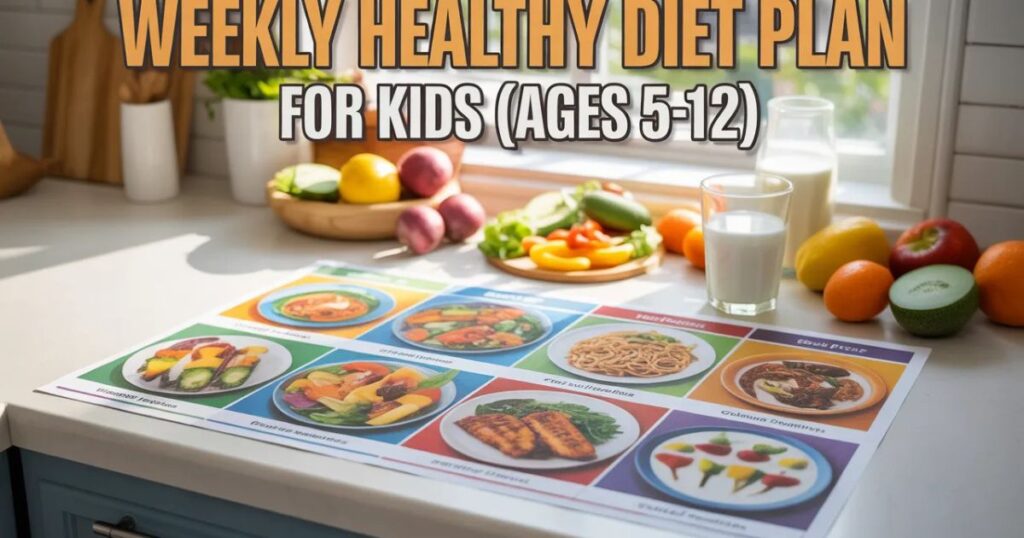
A well-structured weekly healthy diet plan for kids makes daily meal planning easier for parents while ensuring children get balanced nutrition throughout the week. Instead of deciding meals every day, this simple 7-day plan gives you a clear idea of what to serve for breakfast, lunch, snacks, and dinner.
| Day | Breakfast | Lunch | Snack | Dinner |
| Monday | Milk + Boiled Egg + Toast | Chicken + Roti + Salad | Banana + Almonds | Rice + Daal |
| Tuesday | Oatmeal + Honey | Vegetable Sandwich | Apple Slices | Chicken Curry + Roti |
| Wednesday | Paratha + Yogurt | Rice + Beans | Dates + Milk | Vegetable Soup + Bread |
| Thursday | Omelette + Toast | Pasta (homemade) | Orange | Chicken + Roti |
| Friday | Smoothie + Bread | Light Biryani | Nuts Mix | Daal + Rice |
| Saturday | Pancakes + Milk | Chicken Wrap | Fruit Salad | Vegetable Curry |
| Sunday | Omelette + Milk | Family Meal | Fresh Juice | Light Dinner (Soup/Salad) |
This meal plan is simple, budget-friendly, and easy to follow at home. You can adjust portion sizes and ingredients based on your child’s preferences, ensuring they enjoy healthy eating without feeling forced.
Balanced Diet for Children: What to Include
A proper weekly healthy diet plan for kids should include all major food groups to support growth, energy, and overall health. Instead of focusing on one type of food, children need a balanced combination of nutrients in their daily meals.
Protein-rich foods like eggs, chicken, fish, lentils, and beans help in muscle growth and repair. Whole grains such as roti, brown rice, and oats provide long-lasting energy for school and daily activities.
Fruits and vegetables are essential for vitamins, minerals, and fiber, helping improve immunity and digestion. Try to include a variety of colors to make meals more appealing and nutritious. Dairy products like milk, yogurt, and cheese supply calcium for strong bones and teeth.
In addition, small amounts of healthy fats from nuts, seeds, and natural oils support brain development. Keeping a balance between all these food groups ensures children stay active, healthy, and focused throughout the day.
Diet Chart by Age (5, 7, 11, 12 Years)
A well-planned weekly healthy diet plan for kids can be adjusted based on age, as nutritional needs change as children grow. While the core foods remain the same, portion sizes and variety should increase with age.
Diet Chart for 5-Year-Old Child
At this age, children need simple and easy-to-digest meals. Include milk, eggs, soft roti, rice, fruits, and vegetables in small portions throughout the day.
Healthy Meal Plan for 7-Year-Old
A 7-year-old requires more energy for school and activities. Add balanced meals with protein, whole grains, fruits, and healthy snacks like nuts or yogurt.
Balanced Diet for 11–12 Year Old Child
Older kids need higher portions and more nutrients to support growth. Include protein-rich foods, dairy, leafy vegetables, and iron-rich meals to maintain energy and focus.
This age-based approach helps parents provide the right nutrition at every stage without overfeeding or missing essential nutrients.
Healthy School Lunch Ideas for Kids
Including variety in a weekly healthy diet plan for kids becomes easier when you have simple and practical school lunch ideas. A healthy lunch should be balanced, easy to pack, and appealing so children actually enjoy eating it at school.
You can prepare chicken or egg sandwiches using whole wheat bread for a mix of protein and energy. Homemade wraps or rolls with chicken and vegetables are also a great option. For lighter meals, boiled eggs with fruit slices or a peanut butter sandwich with a banana work well.
Adding small sides like cucumber, carrots, or a handful of nuts can make the lunch more nutritious. Try to keep meals colorful and simple, as children are more likely to eat food that looks interesting and familiar.
Easy and Healthy Snack Ideas
Healthy snacking plays an important role in a weekly healthy diet plan for kids, as children often feel hungry between meals and need quick energy. Choosing the right snacks can help maintain their energy levels without relying on unhealthy processed foods.
Fresh fruits like bananas, apples, and mangoes are simple and naturally sweet options. You can also include makhana as a healthy snack. Read more in our guide on phul makhana benefits for kids. Nuts like almonds and pecans are excellent snack options for children when given in moderation. You can also learn more about their benefits in our guide on pecan nuts’ daily benefits for immunity and energy. For something more filling, boiled corn, chickpeas, or dates are excellent choices.
Keeping snacks homemade and nutritious ensures children stay active and satisfied while developing healthy eating habits from an early age.
Foods to Avoid for Kids
While planning a weekly healthy diet plan for kids, it is equally important to know which foods should be limited or avoided to protect their health and development. Some foods may be convenient, but they offer little nutritional value and can negatively affect a child’s energy and focus.
Sugary drinks like sodas and packaged juices should be avoided, as they contain high amounts of sugar with no real benefits. Processed snacks such as chips and biscuits are often high in salt and unhealthy fats. Frequent consumption of fast food like burgers and fries can also lead to poor eating habits.
Excess sweets, chocolates, and artificial drinks should be limited, as they can impact both physical health and concentration levels. Replacing these with natural, homemade options helps children develop healthier food choices over time.
Simple Tips for Parents
Following a weekly healthy diet plan for kids becomes much easier when parents adopt simple and consistent habits at home. Small changes in routine can make a big difference in how children eat and respond to healthy food.
Try to maintain fixed meal times, as routines help children develop better eating habits. Make meals visually appealing by adding colors and variety, which can encourage picky eaters to try new foods. Involving kids in small tasks like choosing fruits or helping in the kitchen can also increase their interest in meals.
It’s equally important to avoid forcing food and instead introduce new items gradually. Keeping meals simple, affordable, and balanced ensures that children stay healthy without creating stress for parents.
Conclusion
Creating a consistent routine with a weekly healthy diet plan for kids can make a lasting difference in their growth, energy, and overall well-being. Instead of relying on random meals or processed foods, a structured plan helps ensure children receive balanced nutrition every day without added stress for parents.
The key is to keep meals simple, practical, and adaptable to your child’s preferences. By combining healthy home-cooked meals, smart snack choices, and proper meal timing, you can build strong eating habits that stay with your child for life. Small, consistent efforts today can lead to healthier, happier, and more active children in the long run.
FAQs
1. What is the best diet plan for kids?
A balanced diet plan for kids includes protein, whole grains, fruits, vegetables, and dairy to support growth, energy, and overall health. Following a weekly healthy diet plan for kids can help ensure they get all essential nutrients in the right portions.
2. What should a child eat in a day?
A child should eat three main meals (breakfast, lunch, dinner) along with 1–2 healthy snacks, including fruits, dairy, and protein-rich foods. Following a weekly healthy diet plan for kids helps maintain proper nutrition and balanced eating habits throughout the day.
3. What is a balanced diet for children aged 5 to 12?
A balanced diet includes carbohydrates, protein, healthy fats, vitamins, and minerals from foods like grains, meat, dairy, fruits, and vegetables.
4. What are healthy lunch ideas for kids?
Healthy lunch ideas include chicken or egg sandwiches, wraps, rice with vegetables, fruits, and homemade snacks for proper nutrition.

I am a professional SEO content writer with over 4 years of experience in creating high-quality content in the health and beauty niche. I specialize in writing research-based, easy-to-understand articles that help readers improve their skincare, wellness, and daily lifestyle.
My goal is to provide accurate, practical, and user-friendly information so readers can make informed decisions about their health and beauty routines.
Note: The information provided is for educational purposes only and should not be considered medical advice.
1 thought on “Weekly Healthy Diet Plan for Kids (Ages 5–12)”