
Introduction
Moringa powder benefits are gaining attention among people looking for simple ways to add more plant-based nutrients to their diet. Made from dried moringa leaves, this green powder contains a variety of vitamins, minerals, antioxidants, fiber, and plant-based protein.
Moringa powder can be added to smoothies, drinks, or meals as part of a balanced diet. Its nutrient profile makes it an interesting addition to everyday wellness, while its versatility makes it easy to include in different routines.
In this guide, we’ll explore 7 potential moringa powder benefits, its nutritional value, ways to use it, and important precautions to consider before adding it to your daily routine.
What Is Moringa Powder?
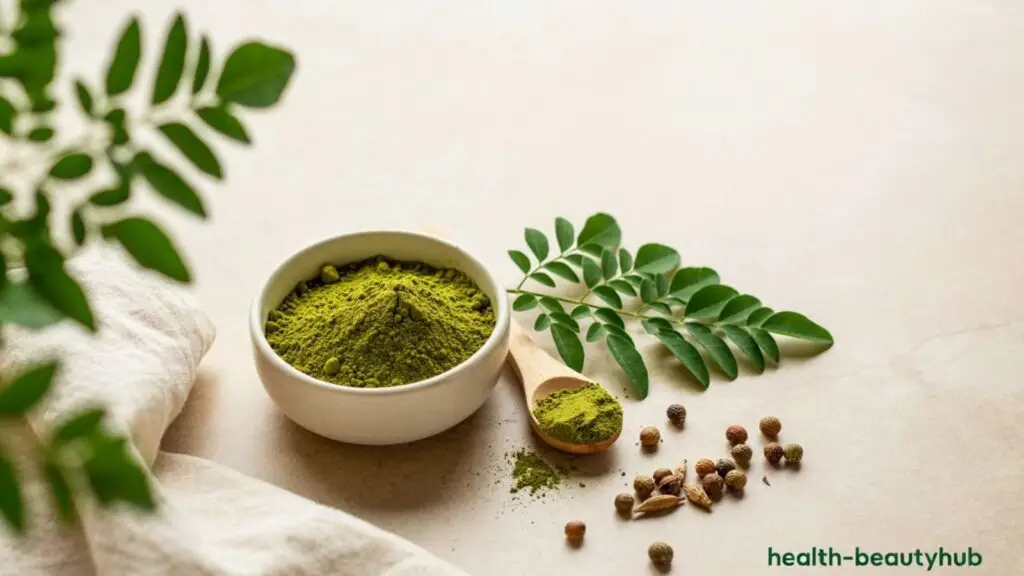
Moringa powder is made by drying and finely grinding the leaves of the moringa tree. The leaves are naturally nutrient-rich, which makes the powder a convenient way to add plant-based nutrients to meals and drinks.
Moringa is also known as the drumstick tree, a name commonly used in parts of Asia and Africa. The dried leaf powder contains a variety of vitamins, minerals, antioxidants, fiber, and plant-based protein, although the exact nutritional content can vary depending on how the leaves are grown, processed, and stored.
Today, people commonly add moringa powder to smoothies, water, soups, or other foods as part of a balanced diet. This simple addition is one reason moringa powder benefits are often explored as part of everyday wellness. It is best viewed as a nutrient-rich food ingredient rather than a replacement for a varied and nutritious eating pattern.
Nutritional Value of Moringa Powder
Moringa powder contains a range of nutrients that can complement a balanced diet. The exact nutritional content may vary depending on the quality of the leaves, growing conditions, processing methods, and storage. These nutrients are one reason the moringa powder benefits are often discussed in relation to everyday nutrition and wellness.
Rich in Vitamins and Minerals
Moringa leaves naturally provide several vitamins and minerals. Moringa powder may contribute nutrients such as vitamin A, vitamin C, calcium, iron, and potassium to the diet. These nutrients play important roles in normal body functions, including immune function, bone health, vision, muscle activity, and red blood cell formation.
Contains Antioxidants
Moringa leaves contain plant compounds with antioxidant properties. Antioxidants help protect cells from oxidative stress caused by unstable molecules known as free radicals. Including a variety of antioxidant-rich foods in the diet can support overall wellness.
Provides Plant Protein and Fiber
Moringa powder also contains plant-based protein and dietary fiber. Protein contributes to the maintenance of body tissues, while fiber supports normal digestive function and can help make meals more satisfying.
Because nutritional needs differ from person to person, moringa powder should be considered an addition to a varied diet rather than a replacement for fruits, vegetables, whole grains, legumes, or other nutrient-rich foods.
7 Moringa Powder Benefits for Better Health
Moringa powder is a nutrient-rich ingredient that can be included in a balanced diet. Its vitamins, minerals, antioxidants, fiber, and plant-based protein may contribute to several aspects of everyday wellness. However, moringa should complement a varied diet rather than replace nutritious foods or medical treatment.
1. May Support Natural Energy Levels
Moringa powder contains nutrients such as iron and plant-based protein that contribute to normal body functions. Including nutrient-rich foods in your diet can help support overall energy and well-being.
Unlike caffeinated drinks, moringa powder does not need to be used as a stimulant. It can simply be added to a balanced eating routine through smoothies, drinks, or meals.
2. Supports Skin and Hair Health
The nutrients and antioxidant compounds found in moringa leaves may support overall skin and hair health. Vitamins and minerals are important for maintaining normal skin and hair, while antioxidants help protect cells from oxidative stress.
For healthy skin and hair, moringa powder works best as part of an overall nutritious diet rather than as a standalone solution.
3. May Support Immune Health
Moringa leaves contain nutrients and plant compounds that can complement a healthy eating pattern. Vitamins such as vitamin C contribute to normal immune function, while a varied diet provides the range of nutrients the body needs.
Adding moringa powder to meals can be one simple way to increase dietary variety, but it should not be considered a treatment for infections or illness.
4. Supports Digestive Health
Moringa powder provides dietary fiber, which can support normal digestive function. Getting enough fiber from foods such as vegetables, fruits, whole grains, legumes, nuts, and seeds is an important part of a healthy diet.
If you are new to moringa powder, introducing a small amount may be more comfortable because larger amounts may cause digestive discomfort in some people. These nutritional qualities are part of the moringa powder benefits that may complement a healthy digestive routine.
5. May Support Healthy Blood Sugar Levels
Moringa is being studied for its potential effects on blood sugar and metabolic health. However, current evidence is not strong enough to consider moringa powder a treatment for diabetes or a replacement for prescribed medication.
The potential moringa powder benefits may complement a healthy eating pattern, but people managing blood sugar should focus on an overall balanced diet and follow advice from their healthcare professional.
6. Supports Heart Health
Adding moringa powder to meals can provide useful nutrients and plant-based antioxidants as part of a balanced eating pattern. A healthy eating pattern that includes vegetables, fruits, whole grains, legumes, nuts, and seeds is an important part of supporting cardiovascular health.
These potential moringa powder benefits may support a heart-healthy lifestyle, but moringa powder should not be considered a treatment for heart conditions.
7. Provides Antioxidant Support
Moringa leaves provide various plant-based compounds that act as antioxidants. These compounds help the body manage oxidative stress, a natural process that takes place in cells. Including foods rich in antioxidants in a varied diet may support overall wellness.
This antioxidant content is one reason moringa powder benefits are often discussed as part of a nutrient-rich eating pattern.
Can Moringa Powder Support Weight Management?
These potential moringa powder benefits may complement a balanced eating pattern, but moringa powder should not be considered a weight-loss treatment. Its fiber and nutrient content may complement a nutritious diet and help add variety to meals and drinks.
Healthy weight management depends on several factors, including overall food choices, physical activity, sleep, and daily energy balance. Simply adding moringa powder to your routine is unlikely to produce meaningful weight changes on its own.
If you want to include moringa powder while working toward a healthy weight, use it as part of balanced meals rather than relying on it as a quick-fix solution.
How to Use Moringa Powder
Moringa powder has a mild earthy flavor and can be added to different foods and drinks. Start with a small amount if you are new to it, especially if you have a sensitive stomach.
With Water or Smoothies
Mix a small amount of moringa powder into water, or add it to a fruit or vegetable smoothie. Smoothies can help balance its earthy flavor with naturally sweet ingredients such as banana, mango, or berries.
In Milk or Herbal Drinks
You can stir moringa powder into milk or blend it into a suitable herbal drink. Stir it well before drinking to help distribute the powder evenly.
Add It to Meals
Moringa powder can be sprinkled into soups, sauces, yogurt, oatmeal, or other meals. Adding it after cooking may help preserve some heat-sensitive nutrients, although the nutritional content can vary depending on preparation and storage.
How Much Moringa Powder Should You Take?
No universally established daily dose of moringa powder is appropriate for everyone. If you are trying it for the first time, follow the serving instructions on the product label and consider starting with a small amount.
People who take regular medications, are pregnant or breastfeeding, or have an ongoing health condition should speak with a healthcare professional before using moringa powder regularly.
Moringa Powder Side Effects and Precautions
Although moringa powder benefits can make it an appealing addition to a balanced diet, it may not suit everyone. Taking large amounts or introducing it too quickly may cause digestive discomfort in some people. Understanding both the potential benefits and precautions can help you use moringa powder more responsibly.
Possible Side Effects of Moringa Powder
Some people may experience mild digestive symptoms after consuming moringa powder, particularly when they take too much at once. Possible side effects may include:
- Nausea
- Stomach discomfort
- Bloating
- Loose stools or diarrhea
- Changes in digestion
Starting with a small amount and following the product’s serving instructions may help reduce the chance of digestive discomfort.
Who Should Talk to a Healthcare Professional First?
People who are pregnant or breastfeeding, take regular medications, or have an ongoing health condition should speak with a healthcare professional before using moringa powder regularly.
Moringa should not replace prescribed medication or professional medical care. The potential moringa powder benefits do not mean that larger amounts are better or that moringa can treat a health condition.
Is There a Safe Daily Limit?
No single daily amount of moringa powder is appropriate for everyone. The amount a person can tolerate may depend on factors such as their diet, medications, health status, and individual sensitivity.
For this reason, avoid assuming that a larger amount will provide greater benefits. Follow the serving guidance on the product label and introduce moringa powder gradually if you are new to it.
Conclusion
Moringa powder can be a convenient way to add plant-based nutrients, antioxidants, fiber, and protein to a balanced diet. The potential moringa powder benefits include supporting everyday nutrition, digestive health, skin and hair health, immune health, and overall wellness.
Moringa powder may complement a healthy diet, but it cannot replace balanced nutrition or prescribed medical treatment. Its benefits are best considered as part of an overall healthy lifestyle that includes nutritious foods, regular physical activity, adequate sleep, and good hydration.
If you want to try moringa powder, start with a small amount and follow the product’s serving instructions. Understanding both the potential moringa powder benefits and possible precautions can help you make a more informed choice about including it in your routine.
FAQs
What are the main moringa powder benefits?
Moringa powder benefits include adding antioxidants, fiber, plant protein, vitamins, and minerals to a balanced diet.
How much moringa powder should I take per day?
Start with a small amount and follow the serving instructions on the product label, as there is no universal dose for everyone.
What is the best time to take moringa powder?
You can take moringa powder with breakfast or lunch, although there is no proven best time for everyone.
Can I take moringa powder every day?
Moringa powder can be included in a daily diet, but follow the recommended serving and consider your individual health needs.
Can moringa powder help with weight loss?
Moringa powder is not a weight-loss treatment, but its nutrients and fiber can complement a balanced diet.
What is the best way to use moringa powder?
You can mix it into smoothies, water, yogurt, oatmeal, soups, or other meals for convenient daily use.

I am a professional SEO content writer with over 4 years of experience in creating high-quality content in the health and beauty niche. I specialize in writing research-based, easy-to-understand articles that help readers improve their skincare, wellness, and daily lifestyle.
My goal is to provide accurate, practical, and user-friendly information so readers can make informed decisions about their health and beauty routines.
Note: The information provided is for educational purposes only and should not be considered medical advice.