
Introduction
Fruits are often praised for their vitamins and fiber, but many people don’t realize that some fruits are also among the fruits highest in protein and key minerals, making them a smart choice for balanced daily nutrition. While fruits cannot replace meat or legumes, certain varieties still provide meaningful amounts of plant-based protein, along with essential minerals such as potassium, magnesium, and calcium. These nutrients play a crucial role in supporting muscle function, heart health, and daily energy levels. Including high-protein fruits in your diet can be helpful for people following vegetarian or balanced eating plans. When chosen wisely, mineral-rich fruits can contribute to hydration, electrolyte balance, and overall nutritional support without adding unnecessary processed foods.
Source: Nutrition insights referenced from Healthline.
Why Protein and Key Minerals Are Important for Overall Health
When talking about fruits highest in protein and key minerals, it’s important to understand how plant-based nutrients support overall health. Protein and essential minerals work together to keep the body working properly. Protein supports muscle repair, hormone production, and immune strength, while key minerals like potassium, magnesium, and calcium help regulate nerve signals, heart rhythm, and bone health. Many people focus only on protein sources, but combining protein with essential minerals improves nutrient absorption and overall balance.
Fruits that contain plant-based protein and minerals also support hydration and energy levels. When included regularly, mineral-rich fruits can help reduce fatigue, support metabolism, and contribute to a more balanced diet without relying on heavily processed foods.
Fruits Highest in Protein and Key Minerals
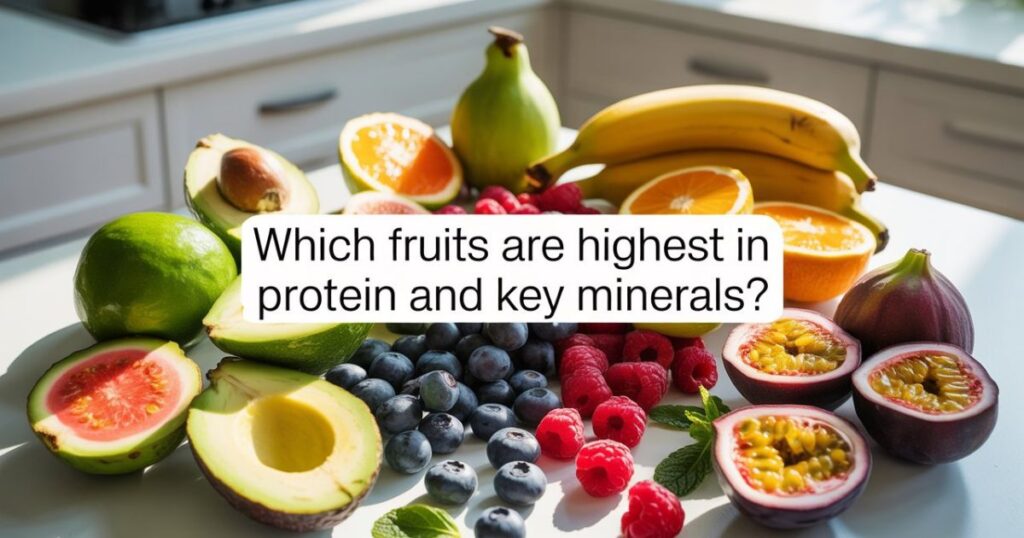
Some fruits provide more protein than others and can be valuable additions to a balanced eating plan. Avocados and guavas are often considered high-protein fruits because they offer both protein and healthy nutrients in a single serving. Passion fruit and jackfruit also stand out for their plant-based protein content while supplying fiber that supports digestion.
Berries, including blackberries and raspberries, may contain less protein than tropical fruits but still contribute to daily intake when eaten regularly. These protein-rich fruits are easy to pair with yogurt, smoothies, or breakfast bowls, making them practical options for naturally improving overall nutrition.
Which Fruits Are Highest in Protein and Key Minerals?
Potassium and magnesium are essential minerals that support muscle function, nerve signaling, and heart health. Several fruits naturally contain both, making them convenient sources of potassium-rich fruits and magnesium-rich fruits in one serving. Bananas, avocados, and passion fruit are well-known for providing potassium, while figs and dried apricots also contribute meaningful amounts of magnesium.
Including mineral-rich fruits in daily meals can help maintain electrolyte balance and reduce muscle cramps. These fruits are especially beneficial for active individuals and those aiming to support cardiovascular health through natural food choices.
Fruits That Provide Calcium Without Dairy Products
Calcium is commonly associated with dairy foods, but several fruits also contribute small yet meaningful amounts of this mineral. Oranges, figs, and blackberries are examples of calcium-rich fruits that can support bone strength when included regularly. While fruits alone may not meet daily calcium needs, they help improve overall intake without relying solely on dairy products.
For people following plant-focused diets, non-dairy calcium sources from fruits can support bone health alongside other nutrient-dense foods. These mineral-rich fruits also provide fiber and antioxidants, making them a smart addition to a balanced daily diet.
Are Fruits a Good Source of Electrolytes and Antioxidants?
Fruits can be a natural source of electrolytes and antioxidants that support hydration and overall health. Many electrolyte-rich fruits, such as bananas, citrus fruits, and melons, help replenish potassium and fluids lost through daily activity. At the same time, fruits are packed with natural antioxidants that protect cells from oxidative stress and support immune function.
Eating a variety of antioxidant-rich fruits regularly may help reduce inflammation and promote long-term wellness. When combined with proper hydration, these fruits offer an easy and natural way to support the body’s daily nutritional needs.
Which Fruits Are Highest and Lowest in Natural Sugar?
Fruits naturally contain sugar, but the amount varies widely between types. Fruits such as mangoes, grapes, and bananas are considered high-sugar fruits, providing quick energy along with vitamins. On the other hand, berries, avocados, and citrus fruits are often lower in sugar and better suited for balanced daily intake.
Choosing low-sugar fruits can help manage energy levels and support blood sugar balance when eaten in moderation. Understanding natural sugar content allows people to enjoy fruit-based nutrition while making smarter choices based on personal health goals.
Do High-Protein Fruits Help with Weight Management?
Fruits highest in protein and key minerals can support weight management by helping control appetite and reducing unnecessary snacking. Protein increases feelings of fullness, which may lead to better portion control throughout the day. Including high-protein fruits such as guava or passion fruit in meals can make snacks more satisfying without adding excessive calories.
When combined with fiber, plant-based protein from fruits supports digestion and steady energy levels. Choosing protein-rich fruits as part of a balanced diet helps people maintain healthy eating habits while supporting long-term weight goals naturally.
Best Ways to Eat Protein- and Mineral-Rich Fruits Daily
Adding protein- and mineral-rich fruits to your routine does not require major diet changes. Blending protein-rich fruits with seeds or nuts into smoothies can boost nutrition without extra effort. Pairing fruits with yogurt or oatmeal can improve satiety and help balance meals.
Fresh fruit bowls, snacks between meals, or light desserts made with mineral-rich fruits are also effective options. By rotating different nutrient-dense fruits throughout the week, you can support daily protein and mineral intake while keeping meals enjoyable and easy to maintain.
Conclusion
Including fruits highest in protein and key minerals can be a smart way to support daily nutrition. While fruits may not replace traditional protein sources, they still contribute valuable plant-based protein, minerals, and antioxidants. Choosing a variety of nutrient-dense fruits helps support energy levels, digestion, and overall health. When consumed as part of a balanced diet, these fruits can play a significant role in promoting long-term wellness.
You May Also Like
Explore more helpful articles on our website to expand your knowledge further.
15 Vegetarian High-Protein Weight Loss Plans
12 Surprising Benefits of Pistachios for Cholesterol, Heart, Diabetes, Memory & Eyesight