
Introduction
Feeling tired, dizzy, or unusually thirsty during hot weather? These may be early dehydration symptoms that your body should never ignore. Dehydration happens when the body loses more fluids than it takes in, making it difficult for organs and cells to function properly. From headaches and dry mouth to dark urine and fatigue, even mild dehydration can affect your energy levels, mood, and overall health. Understanding the common dehydration symptoms can help you stay healthy, hydrated, and safe during summer and daily activities.
What Is Dehydration?
Dehydration occurs when the body loses more fluids than it receives, making it difficult to perform normal functions properly. Your body naturally loses fluids throughout the day through activities like sweating, breathing, digestion, and using the bathroom. If these lost fluids are not replaced, dehydration symptoms may start affecting your energy, body temperature, and overall health.
Hot summer weather, excessive sweating, vomiting, diarrhea, and not drinking enough water are some of the most common causes of dehydration. While mild dehydration can often be treated by increasing fluid intake, severe dehydration symptoms may require immediate medical attention.
10 Common Dehydration Symptoms You Should Never Ignore
Excessive Thirst
One of the first dehydration symptoms many people notice is excessive thirst, especially during hot weather or after physical activity. When the body loses too much fluid through sweating, heat, or physical activity, the brain sends signals to increase your thirst. Ignoring this sign may lead to more serious health problems over time.
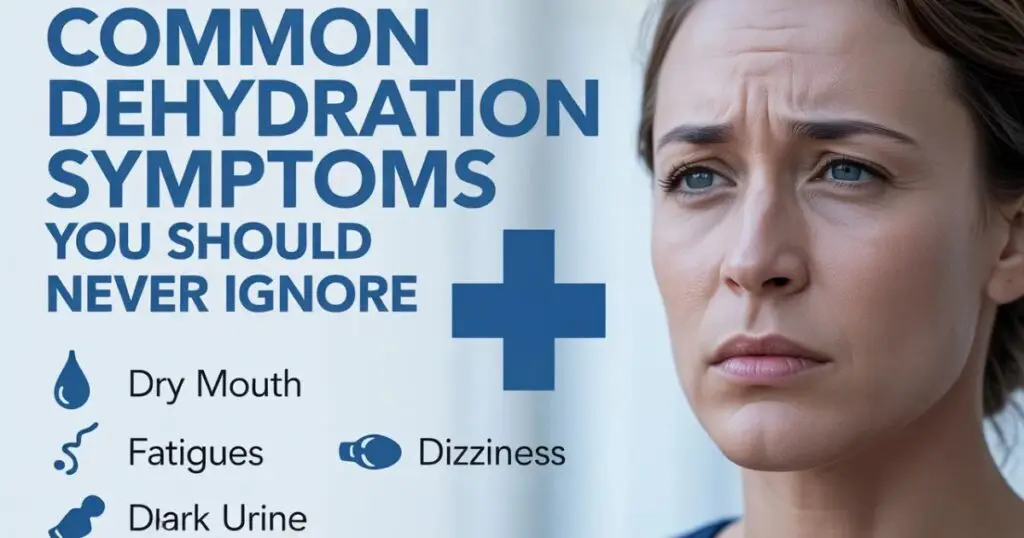
Dark Urine
Dark yellow or amber-colored urine can be a strong sign of dehydration. Healthy hydration usually produces light yellow urine, while darker urine often means the body is trying to conserve water. Reduced urination may also indicate fluid loss.
Fatigue
Low energy and unusual tiredness are common dehydration symptoms, especially during hot summer days. When the body lacks enough fluids, it becomes harder for oxygen and nutrients to reach muscles and organs efficiently, causing weakness and exhaustion.
Dry Mouth
A dry or sticky mouth may indicate that the body needs more fluids. Dehydration can reduce saliva production, making the mouth and throat feel uncomfortable. Cracked lips may also appear when hydration levels become too low.
Headache
Dehydration headaches are very common and can range from mild discomfort to severe pain. Losing fluids may affect blood flow and electrolyte balance, which can trigger headaches and difficulty concentrating.
Dizziness
Feeling dizzy or lightheaded may happen when dehydration affects blood pressure and circulation. Standing up too quickly in hot weather can sometimes worsen dizziness caused by fluid loss.
Dry Skin
Dry, flaky, or less elastic skin may develop when the body does not receive enough water. In some cases, dehydrated skin may appear dull and feel rough to the touch.
Muscle Cramps
Excessive sweating can cause the body to lose important minerals and electrolytes. This may lead to painful muscle cramps, especially after exercise or outdoor activities during the summer.
Rapid Heartbeat
The heart may beat faster when the body struggles to maintain normal blood circulation due to dehydration. Rapid heartbeat or heart palpitations can become more noticeable during physical activity or extreme heat.
Confusion
Severe dehydration symptoms can sometimes affect brain function and mental clarity. Severe dehydration may sometimes cause confusion, irritability, and difficulty focusing.
What Causes Dehydration?
Dehydration can develop when the body loses more fluids than it takes in. This commonly happens during hot summer weather, intense physical activity, illness, or when the body does not get enough fluids throughout the day. When fluid levels drop, dehydration symptoms may begin to affect the body’s normal functions and overall energy levels.
Most common causes of dehydration include:
Excessive sweating
Not drinking enough water
Vomiting and diarrhea
Fever and infections
Intense exercise or outdoor work
Drinking too much caffeine or alcohol
Hot and humid weather
Certain medical conditions, like diabetes
People who spend long hours outdoors or participate in sports during the summer may have a higher risk of dehydration due to continuous fluid loss.
Who Is Most at Risk of Dehydration?
Although dehydration can affect anyone, some people have a higher risk of developing dehydration symptoms due to age, lifestyle, weather exposure, or certain health conditions. These groups may lose fluids more quickly or may not drink enough water to maintain healthy hydration levels.
Some people may have a higher risk of dehydration symptoms than others.
Older adults
Infants and young children
Athletes and active individuals
People working outdoors in hot weather
Individuals with fever, vomiting, or diarrhea
People with chronic health conditions like diabetes
Those who do not drink enough fluids daily
During summer, dehydration symptoms may become more severe because the body loses extra fluids through sweating and continuous heat exposure.
How to Prevent Dehydration in Summer
Preventing dehydration during hot summer weather is important for maintaining energy, healthy skin, and overall well-being. Simple daily habits can help reduce the risk of dehydration symptoms and keep the body properly hydrated throughout the day.
Drinking enough water is one of the easiest ways to stay hydrated, especially during outdoor activities or extreme heat. Adding healthy drinks like lemon water may also support hydration and refresh the body during summer. You can also read about the benefits of drinking lemon water in summer for additional hydration support.
Eating foods with high water content can also help maintain healthy fluid levels. Fruits such as watermelon, oranges, strawberries, and cucumbers provide both hydration and essential nutrients. These water-rich fruits for summer hydration may help the body stay cool and refreshed during hot weather.
Other helpful ways to prevent dehydration include:
Carrying a water bottle throughout the day
Avoiding excessive sugary or caffeinated drinks
Wearing lightweight clothing in hot weather
Taking breaks during outdoor activities
Drinking fluids regularly, even before feeling thirsty
When to See a Doctor
Mild dehydration symptoms can often improve by drinking more fluids and resting in a cool place. However, severe dehydration may become dangerous and require immediate medical attention if symptoms continue to worsen.
You should seek medical help if dehydration symptoms include:
Extreme dizziness or fainting
Rapid heartbeat or breathing
Confusion or difficulty focusing
Severe weakness
Very dark urine or little urination
High fever
Persistent vomiting or diarrhea
Infants, young children, and older adults may be more vulnerable to serious dehydration complications. Getting early treatment can help prevent more severe health problems and support faster recovery.
Conclusion
Dehydration can affect the body in many ways, from causing headaches and fatigue to more serious health complications if ignored. Recognizing early dehydration symptoms and increasing fluid intake can help protect your health, especially during hot summer weather.
Simple habits like drinking enough water, eating water-rich fruits, and avoiding excessive heat exposure may help the body stay properly hydrated throughout the day. Paying attention to dehydration symptoms early can support better energy levels, healthy body function, and overall well-being.
FAQs
What are the first signs of dehydration?
Some of the earliest dehydration symptoms include excessive thirst, dry mouth, dark urine, fatigue, headache, and dizziness.
Can dehydration cause headaches?
Yes, dehydration can affect blood flow and electrolyte balance, which may trigger headaches and difficulty concentrating.
What does dehydrated urine look like?
Dark yellow or amber-colored urine may indicate dehydration, while healthy hydration usually produces light yellow urine.
How can I prevent dehydration in summer?
Drinking enough water, eating water-rich fruits, avoiding excessive heat, and consuming healthy fluids can help prevent dehydration symptoms during summer.
When should I see a doctor for dehydration?
You should seek medical attention if dehydration symptoms include confusion, fainting, rapid heartbeat, severe weakness, or persistent vomiting and diarrhea.

I am a professional SEO content writer with over 4 years of experience in creating high-quality content in the health and beauty niche. I specialize in writing research-based, easy-to-understand articles that help readers improve their skincare, wellness, and daily lifestyle.
My goal is to provide accurate, practical, and user-friendly information so readers can make informed decisions about their health and beauty routines.
Note: The information provided is for educational purposes only and should not be considered medical advice.
4 thoughts on “10 Common Dehydration Symptoms You Should Never Ignore”