
Introduction
As skin naturally changes with age, many people look for simple dietary ways to support healthy-looking skin and maintain a balanced nutrition routine. Collagen is one of the proteins that gives structural support to tissues such as skin, bones, cartilage, and other connective tissues. The body produces its own collagen by using amino acids along with certain nutrients, including vitamin C, which plays a role in normal collagen formation.
A homemade anti-aging collagen powder can be made by combining nutrient-rich seeds, nuts, foxnuts, and other whole-food ingredients into one convenient mixture. Pumpkin seeds, flax seeds, almonds, walnuts, sunflower seeds, chia seeds, haleem seeds, and other ingredients provide protein, healthy fats, minerals, fiber, and other nutrients that can contribute to an overall nutritious eating pattern.
However, homemade collagen powder is not the same as commercial hydrolyzed collagen peptides. The purpose of this recipe is to combine nutritious foods that provide nutrients involved in normal body functions rather than claiming that the powder itself is collagen. Including a variety of nutrient-rich foods, along with fruits and vegetables that provide vitamin C, can help support a balanced diet.
In this guide, you will learn how to make homemade anti-aging collagen powder at home, why each ingredient is included, how to roast and grind the ingredients, how to take and store the powder, and what to know before making it part of your daily routine.
What Is Homemade Anti-Aging Collagen Powder?
Homemade anti-aging collagen powder is a homemade blend of nutrient-rich seeds, nuts, foxnuts (phool makhana), and other whole-food ingredients. The ingredients are lightly dry-roasted where appropriate, ground into a fine powder, and stored in an airtight container. A small serving can then be mixed with milk or water as part of a balanced diet.
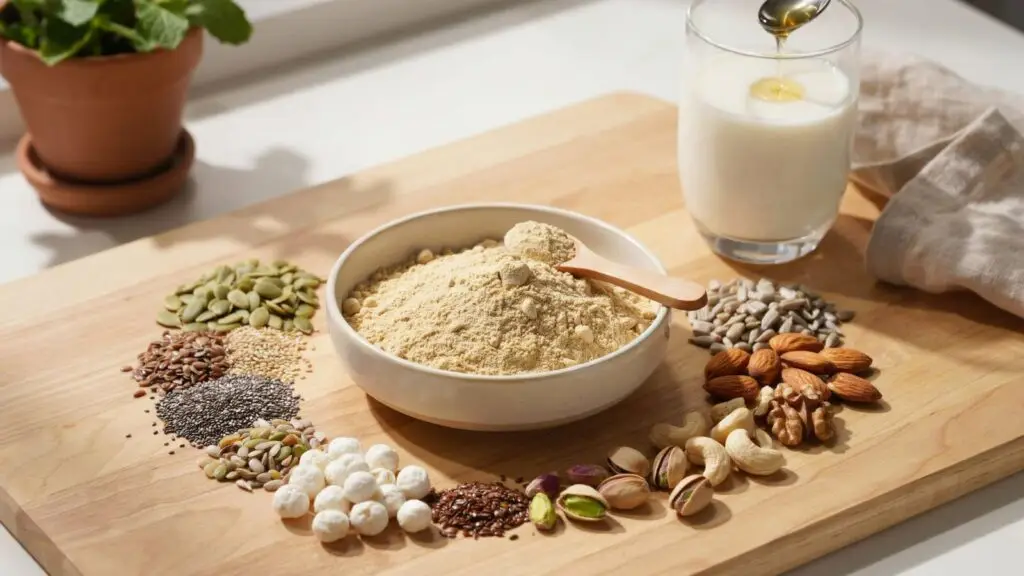
The recipe includes ingredients such as pumpkin seeds, flax seeds, almonds, walnuts, sunflower seeds, chia seeds, haleem seeds, 4-magaz, and foxnuts. Together, these foods provide a combination of plant protein, healthy fats, fiber, vitamins, and minerals. Rather than relying on one ingredient, the recipe brings several nutrient-dense foods together in a convenient form.
Homemade Nutrient Powder vs. Commercial Collagen Peptides
It is useful to understand that a homemade seed-and-nut powder and a commercial collagen supplement are not the same product. Commercial collagen peptides are made from collagen that has been broken down into smaller protein fragments, while this homemade recipe is made from whole foods.
The homemade mixture therefore does not provide collagen peptides in the same way as a collagen supplement. Instead, it provides nutrients that contribute to overall nutrition and normal body functions. Protein supplies amino acids used to build proteins, while nutrients such as vitamin C, zinc, and copper have important roles in normal connective-tissue processes.
Why Collagen and Nutrition Matter for Healthy-Looking Skin
Collagen is one of the major structural proteins in the skin. The body continuously makes and breaks down collagen as part of normal tissue maintenance, and collagen production naturally changes with age.
Nutrition is one part of this process. Adequate protein provides amino acids, while vitamin C is required for normal collagen formation. Zinc and copper also contribute to normal connective-tissue function. This is why a varied eating pattern containing protein-rich foods, fruits, vegetables, nuts, seeds, and other nutrient-dense foods is more useful than relying on a single “anti-aging” ingredient.
For this reason, homemade anti-aging collagen powder can be viewed as a convenient way to add several nutritious foods to the diet, rather than as a guaranteed method for reversing skin aging or removing wrinkles.
How Does the Body Make Collagen?
Collagen is a protein naturally found throughout the body and is an important part of connective tissues. It helps provide structural support to areas such as the skin, bones, cartilage, tendons, and ligaments. The body continually produces and breaks down collagen as part of normal tissue maintenance. Making collagen is a natural biological process that depends on amino acids and several nutrients rather than on one particular food or homemade mixture.
Understanding how collagen is made also helps explain the purpose of a homemade anti-aging collagen powder. The ingredients in this type of powder can provide protein, healthy fats, minerals, and other nutrients as part of a balanced eating pattern, but they do not replace the body’s natural collagen-making process.
What Collagen Is
Collagen is one of the body’s main structural proteins. It forms part of the framework that helps tissues maintain their structure and function. In the skin, collagen contributes to structural support and is involved in the normal maintenance of connective tissue.
The body does not simply obtain collagen from food and place it directly into the skin. Instead, it produces its own collagen using amino acids and other nutrients. This is important to understand when discussing homemade anti-aging collagen, because a homemade seed-and-nut powder provides nutrients rather than collagen itself.
This distinction is important when discussing foods or homemade powders marketed as collagen-supporting options.
Amino Acids and Protein
Protein provides amino acids, which are the building blocks the body uses to make proteins, including collagen. Foods such as nuts, seeds, dairy products, eggs, fish, beans, lentils, and other protein-rich foods can contribute to overall protein intake.
The ingredients used in this homemade powder, including pumpkin seeds, almonds, walnuts, sunflower seeds, chia seeds, and haleem seeds, provide varying amounts of plant protein. Including these foods in a varied diet can help increase overall nutrient intake.
However, eating more of one protein-rich ingredient does not automatically mean the body will produce more collagen. Overall dietary adequacy, protein intake, and the availability of other required nutrients all matter.
Role of Vitamin C
Vitamin C contributes to the body’s normal collagen-forming processes. It is involved in several enzymatic reactions related to collagen production, making adequate vitamin C intake an important part of a varied and balanced diet.
The homemade powder itself does not need to contain a large amount of vitamin C to be useful as a nutrient-rich food mixture. Instead, you can include vitamin C-rich foods alongside it. Guava, oranges, lemons, grapefruit, strawberries, bell peppers, tomatoes, and other fruits and vegetables can provide vitamin C.
This makes the overall eating pattern more important than relying on homemade anti-aging collagen powder alone. Combining a nutrient-rich powder with a variety of fruits, vegetables, and protein foods provides a broader range of nutrients.
Other Nutrients Involved in Normal Connective-Tissue Function
Collagen-related processes involve more than protein and vitamin C. Several minerals also contribute to normal connective-tissue function and overall nutrition.
Zinc and copper are examples of minerals involved in normal body functions related to connective tissues. Nuts and seeds can contribute these minerals to the diet, although the amount varies between individual foods.
Other nutrients, including healthy fats, fiber, vitamins, and minerals, also contribute to general nutritional health. This is one reason the recipe combines several different seeds and nuts rather than focusing on a single ingredient.
A varied diet is generally more useful for meeting nutritional needs than depending on one homemade powder or one so-called anti-aging food.
How Aging Can Affect Collagen Production
Collagen production and turnover naturally change with age. As people get older, the body may produce collagen at a slower rate, while existing collagen can also undergo changes. Environmental factors such as prolonged sun exposure can further affect the appearance and structure of the skin over time.
These changes are a normal part of aging and cannot be completely prevented by one food, drink, or powder. A balanced diet can provide nutrients needed for normal body functions, while other lifestyle habits, including sun protection, adequate sleep, regular physical activity, and avoiding smoking, can also be relevant to overall health and healthy-looking skin.
For this reason, homemade anti-aging collagen powder is best viewed as one convenient food-based addition to a varied diet rather than a guaranteed way to reverse signs of aging.
Homemade Anti-Aging Collagen Powder Ingredients
The ingredients in this homemade anti-aging collagen powder are selected mainly for their nutritional value. Seeds, nuts, and foxnuts provide a combination of plant protein, healthy fats, fiber, vitamins, and minerals. Together, they can complement a balanced eating pattern while adding variety to the diet.
It is important to remember that these ingredients do not contain collagen in the same form as commercial collagen peptides. Their value comes from the nutrients they provide, which support normal body functions and overall nutrition.
Pumpkin Seeds
Pumpkin seeds are a nutrient-dense ingredient that provides plant protein, healthy fats, magnesium, zinc, and other minerals. Zinc is involved in many normal body processes, while protein provides amino acids that the body uses to build proteins.
Their mild flavor also makes them easy to combine with other seeds and nuts. Pumpkin seeds can therefore provide both nutritional variety and a pleasant base for this homemade powder.
Flax Seeds
Flax seeds provide plant-based protein, fiber, healthy fats, and alpha-linolenic acid (ALA), a plant-based omega-3 fatty acid. They also contain naturally occurring plant compounds called lignans.
Because whole flax seeds can pass through the digestive system without being fully broken down, grinding them before adding them to the mixture can make them easier to incorporate into the powder.
Flax seeds are included for their overall nutritional contribution rather than because they directly provide collagen.
Foxnuts (Phool Makhana)
Foxnuts, also known as phool makhana, are commonly used in South Asian foods and snacks. They provide carbohydrates, some protein, and minerals while adding a light, mild ingredient to the mixture.
Foxnuts do not provide collagen, but they can make the homemade powder more versatile and provide an additional whole-food ingredient. Lightly roasting them can also help reduce their moisture before grinding.
4-Magaz
4-magaz is a traditional seed mixture generally made from the edible kernels of several types of melon and squash seeds. It provides plant protein, healthy fats, and minerals.
Because the exact composition of a 4-magaz mixture can vary, its nutritional content may differ depending on the seeds used. Including it in the recipe adds another source of seeds and helps create a more varied nutrient profile.
Almonds
Almonds provide plant protein, healthy fats, fiber, vitamin E, magnesium, and other nutrients. Vitamin E has antioxidant properties and is an important nutrient in the diet.
The combination of protein, healthy fats, and minerals makes almonds a useful ingredient in a nutrient-dense homemade powder. They also add a naturally mild, nutty flavor.
Sunflower Seeds
Sunflower seeds provide vitamin E, healthy fats, plant protein, magnesium, and other nutrients. They can add nutritional variety without making the mixture overly dependent on nuts.
Their vitamin E content is one reason they are commonly included in nutrient-rich food combinations. Like the other seeds in this recipe, they should be considered a source of nutrients rather than a direct source of collagen.
Haleem Seeds
Haleem seeds, also known as garden cress seeds, are small seeds traditionally used in South Asian food preparations. They provide plant protein, fiber, and minerals.
Their nutritional profile makes them a useful addition to a mixed seed-and-nut powder. Because they have a distinctive flavor, a moderate amount can be used so they complement rather than overpower the other ingredients.
Chia Seeds
Chia seeds provide fiber, plant protein, ALA omega-3 fatty acids, and several minerals. Their ability to absorb liquid also makes them useful in foods and drinks when used in appropriate amounts.
For this recipe, chia seeds are not dry-roasted. They can be added after the roasted ingredients have cooled, either whole or lightly ground. Keeping them separate from the roasting step helps maintain the intended preparation method for the mixture.
Fennel Seeds
Fennel seeds are mainly included for flavor and variety. They contain fiber and naturally occurring plant compounds and have a distinctive sweet, aromatic taste.
Only a small amount is needed because their flavor can become strong when combined with many other ingredients. Fennel seeds are not an essential collagen-related ingredient, so they can also be left out if a simpler recipe is preferred.
Walnuts
Walnuts provide plant protein, healthy fats, fiber, and alpha-linolenic acid (ALA), a plant-based omega-3 fatty acid. They also contribute several vitamins and minerals to the diet.
Their rich texture and flavor work well in a seed-and-nut powder. Walnuts add nutritional variety to the recipe, but like the other ingredients, they should be viewed as part of an overall balanced diet rather than as a direct collagen source.
Homemade Anti-Aging Collagen Powder Recipe
Making homemade anti-aging collagen powder is a simple way to combine several nutrient-rich seeds, nuts, and foxnuts into one convenient mixture. The ingredients are prepared separately, lightly roasted where appropriate, cooled, and then ground into a fine powder.
This homemade anti-aging collagen powder is intended as a nutrient-rich food mixture rather than a replacement for commercial collagen peptides. Its ingredients provide protein, healthy fats, fiber, vitamins, and minerals that can contribute to a balanced eating pattern.
Ingredients and Quantities
The following quantities make a moderate batch of homemade anti-aging collagen powder that can be stored and used in small servings.
| Ingredient | Suggested Quantity |
|---|---|
| Pumpkin seeds | ½ cup |
| Flax seeds | ½ cup |
| Foxnuts (phool makhana) | 1 cup |
| 4-magaz | ½ cup |
| Almonds | ½ cup |
| Sunflower seeds | ½ cup |
| Haleem seeds | ¼ cup |
| Chia seeds | ¼ cup |
| Fennel seeds | 2 tablespoons |
| Walnuts | ½ cup |
These quantities are flexible. You can slightly adjust the amounts according to taste and availability, while keeping the overall mixture balanced.
If you prefer a simpler recipe, fennel seeds can be reduced or omitted. The same applies to any ingredient that does not suit your taste or dietary needs.
How to Prepare the Ingredients
Proper preparation helps reduce excess moisture and gives the homemade anti-aging collagen powder a better texture and storage quality.
- Clean the ingredients: Check the seeds, nuts, and foxnuts and remove any unwanted particles or damaged pieces.
- Keep chia seeds aside: Do not dry-roast the chia seeds with the other ingredients. They can be added after the roasted ingredients have cooled.
- Prepare the foxnuts: Place the foxnuts in a dry pan and roast them over low to medium heat until they become crisp. Stir regularly to prevent burning.
- Roast the seeds: Lightly dry-roast pumpkin seeds, flax seeds, sunflower seeds, 4-magaz, and haleem seeds separately or in suitable small batches. Use low to medium heat and avoid browning them excessively.
- Roast the nuts lightly: Almonds and walnuts can be lightly warmed in a dry pan if desired. They do not need prolonged roasting.
- Roast fennel seeds briefly: If using fennel, warm it lightly for a short time to bring out its aroma.
- Cool everything completely: Spread the roasted ingredients on a clean plate or tray and allow them to cool fully before grinding.
Avoid adding honey, milk, or any other liquid during this preparation stage. The homemade anti-aging collagen powder should remain completely dry before storage.
How to Make the Powder
Once all the roasted ingredients have cooled, the powder can be prepared in a few simple steps.
- Add the cooled foxnuts, seeds, almonds, walnuts, and fennel seeds to a clean, dry grinder.
- Grind in short pulses rather than running the grinder continuously. This helps prevent the nuts and seeds from releasing too much oil.
- Grind until the mixture reaches a fine or slightly coarse powder, depending on your preferred texture.
- Add the unroasted chia seeds and pulse briefly, or grind them separately before combining them with the mixture.
- Mix everything thoroughly in a clean, dry bowl.
- If you prefer a smoother homemade anti-aging collagen powder, pass the mixture through a clean sieve and return any larger pieces to the grinder.
- Allow the finished powder to cool completely before transferring it to its storage container.
There is no need to grind the mixture into an extremely fine flour. A slightly coarse texture is perfectly suitable and can make the powder easier to prepare without overheating the ingredients.
How to Store the Homemade Powder
Storage is important because the mixture contains nuts and seeds that naturally contain fats. Exposure to heat, moisture, air, or direct sunlight can affect freshness over time.
Transfer the finished homemade anti-aging collagen powder to a clean, completely dry, airtight glass jar or food-safe container. Keep the container tightly closed when not in use.
For better freshness:
- Use a clean, dry spoon each time.
- Keep the jar away from direct sunlight and heat.
- Do not add milk, water, honey, or other liquids to the storage container.
- Avoid storing the powder in a humid area.
- Refrigerate the powder if your kitchen is warm or if you want to extend its freshness.
- Check the smell, taste, and appearance before using an older batch.
Because homemade mixtures do not contain commercial preservatives, it is better to prepare a manageable batch rather than making a very large quantity. If the powder develops an unusual smell, bitter taste, visible moisture, mold, or other signs of spoilage, discard it.
For the best quality, make homemade anti-aging collagen in a quantity that you can use while the ingredients still taste fresh.
How to Take Homemade Anti-Aging Collagen Powder
Once prepared, homemade anti-aging collagen powder can be added to milk or water as a simple food-based addition to your daily eating routine. Because the mixture contains several seeds and nuts, a small serving is generally more practical than taking a large amount at once.
The powder should be treated as part of a varied diet rather than as a replacement for protein-rich foods, fruits, vegetables, or other nutritious meals.
Suggested Serving
A practical starting serving is 1 tablespoon (about 10–15 g) once a day.
This is a suggested food serving for this homemade recipe, not a clinically established collagen dose. The amount can be adjusted according to your overall diet, calorie needs, tolerance, and the ingredients used in your particular batch.
If you are trying homemade anti-aging collagen powder for the first time, starting with a smaller amount can help you see how well you tolerate the combination of nuts and seeds.
With Milk
Milk is an easy way to consume the powder because it adds protein, calcium, and other nutrients to the serving. Add about 1 tablespoon of the powder to one glass of milk and mix well.
You can use warm or cool milk according to your preference. Avoid very hot milk if it makes the mixture unpleasant to drink.
Milk does not make the homemade powder produce collagen or make the ingredients work faster.
With Water
If you do not consume milk or simply prefer a lighter option, homemade anti-aging collagen powder can also be mixed with water.
Add approximately 1 tablespoon to a glass of water and stir or shake thoroughly. Because the mixture contains ground seeds and nuts, some particles may settle at the bottom, so stir again before finishing the drink.
Water is a suitable option when you want to take the powder without adding the extra calories and nutrients provided by milk.
Optional Honey
If you enjoy a sweeter flavor, you can mix in a small amount of honey. About 1 teaspoon is enough for a mild sweetness, although the amount can be adjusted according to preference.
Honey is optional and is not required for collagen formation. It is mainly a sweetener and should be considered an added source of sugar.
You can also enjoy the powder without honey, especially if your regular diet already contains other sweet foods.
Best Time to Take It
There is no established special time of day when homemade anti-aging collagen powder must be taken to support collagen formation.
You can take it with breakfast, as part of a snack, or at another convenient time that fits your eating routine. Consistency with a balanced diet is more useful than focusing on a particular hour.
If you take it with milk, breakfast or an afternoon snack can be convenient options. If the mixture feels heavy when taken close to bedtime, choose an earlier time of day.
Whether It Can Be Used Daily
For most healthy adults who tolerate all of the ingredients, a small serving can be included as part of a varied daily eating pattern. Using the powder every day is not necessary, as the nutrients it provides can also come from a variety of nuts, seeds, and other foods.
If you already eat plenty of nuts, seeds, and other nutrient-rich foods, you may not need this particular powder every day. A varied diet is still important for getting a broader range of nutrients.
People with food allergies, specific dietary restrictions, or medical conditions that affect their diet should check the ingredients carefully and discuss regular use with an appropriate healthcare professional.
Most importantly, homemade anti-aging collagen powder should be viewed as a convenient nutrient-rich food mixture, not as a guaranteed way to increase collagen levels, remove wrinkles, or reverse normal skin aging.
Why These Ingredients Are Included
The ingredients in this homemade anti-aging collagen powder were selected for their different nutritional contributions rather than because one particular ingredient can create collagen on its own. Combining seeds, nuts, foxnuts, and other whole-food ingredients provides a broader range of nutrients in one convenient mixture.
The table below explains the main purpose of each ingredient group and how it contributes to the overall nutritional profile of the recipe.
| Ingredient group | Main nutritional contribution |
|---|---|
| Seeds | Protein, healthy fats, fiber, and minerals |
| Nuts | Protein, healthy fats, vitamin E, and other micronutrients |
| Makhana | Carbohydrates, some protein, and minerals |
| Chia and flax seeds | Fiber and plant-based omega-3 fats |
| Haleem seeds | Protein, fiber, and minerals |
Seeds: Protein, Healthy Fats, and Minerals
Pumpkin seeds, sunflower seeds, 4-magaz, and other seeds contribute plant protein, healthy fats, fiber, and minerals. The exact nutritional profile varies between seeds, which is one reason combining several varieties can provide greater dietary variety.
Protein supplies amino acids that the body uses to make its own proteins, while minerals such as zinc, magnesium, and copper contribute to various normal body functions.
These ingredients therefore support the overall nutritional purpose of the homemade anti-aging collagen powder rather than acting as direct sources of collagen.
Nuts: Protein, Healthy Fats, and Micronutrients
Almonds and walnuts add protein, healthy fats, fiber, and several vitamins and minerals. Almonds are also a source of vitamin E, walnuts provide plant-based omega-3 fatty acid (ALA). While other nuts can also contribute useful nutrients to a balanced eating pattern.
Including nuts alongside seeds gives the mixture a different nutritional profile and improves its texture and flavor. Since nuts and seeds are energy-dense foods, keeping the serving size moderate is practical.
Makhana: Carbohydrates, Some Protein, and Minerals
Foxnuts, or makhana, provide carbohydrates along with some protein and minerals. They also give the powder a lighter texture and help balance the heavier nut-and-seed ingredients.
Makhana is not included because it contains collagen. Instead, it serves as a nutritious whole-food ingredient that contributes to the overall composition of the recipe.
Chia and Flax: Fiber and Plant-Based Omega-3 Fats
Chia and flax seeds are particularly useful for adding fiber and plant-based omega-3 fats in the form of alpha-linolenic acid (ALA). They also contribute some protein and minerals.
Fiber can contribute to a balanced diet and digestive health, while ALA is an essential fatty acid that the body needs from food.
Using both chia and flax also adds variety to the mixture instead of depending on a single type of seed.
Haleem Seeds: Protein and Minerals
Haleem seeds, also known as garden cress seeds, provide plant protein, fiber, and minerals. They have a distinctive flavor, so using a moderate amount can help keep the overall mixture pleasant to consume.
Their role in the homemade anti-aging collagen recipe is nutritional variety. They should not be described as a direct collagen source or as a treatment for signs of aging.
Why Combining Different Ingredients Matters
The main advantage of this recipe is the combination of different nutrient-rich foods. Seeds contribute protein, fats, fiber, and minerals; nuts add healthy fats and micronutrients; makhana provides carbohydrates and additional nutrients; while chia, flax, and haleem seeds add further variety.
This approach makes the homemade anti-aging collagen powder more useful as a food-based nutrition option than presenting one ingredient as a special anti-aging solution. A balanced diet that includes fruits, vegetables, protein foods, whole grains, nuts, and seeds remains the broader foundation for meeting nutritional needs.
This approach makes the recipe more useful as a food-based nutrition option than presenting one ingredient as a special anti-aging solution. A balanced diet that includes fruits, vegetables, protein foods, whole grains, nuts, and seeds remains the broader foundation for meeting nutritional needs.
Can Homemade Collagen Powder Support Healthy Skin?
A nutrient-rich homemade anti-aging collagen powder can be one part of a balanced eating pattern that provides protein, healthy fats, fiber, vitamins, and minerals. These nutrients support normal body functions, including processes involved in maintaining connective tissues and healthy skin.
However, the effect of a food-based powder should be understood realistically. Skin health depends on many factors, including age, genetics, nutrition, sun exposure, sleep, smoking, and overall lifestyle. No single food or homemade mixture can control all of these factors.
What the Ingredients Can Realistically Contribute
The seeds and nuts used in this recipe provide several nutrients that are useful as part of a varied diet. Protein provides amino acids that the body uses to make proteins, while vitamin C from fruits and vegetables is required for normal collagen formation.
The recipe also provides healthy fats, fiber, and minerals from ingredients such as pumpkin seeds, almonds, walnuts, sunflower seeds, chia seeds, flax seeds, and haleem seeds.
These nutritional contributions make the homemade anti-aging collagen powder a convenient way to combine several nutrient-rich foods. However, the presence of these nutrients does not mean that the powder will automatically increase collagen production or produce visible changes in the skin.
Collagen Formation vs. Consuming Collagen
The body makes its own collagen using amino acids and other nutrients. Eating protein-rich foods provides amino acids, but the body still has to use those building blocks through its normal biological processes.
This is different from consuming commercial collagen peptides, which are produced from collagen and broken down into smaller protein fragments. A homemade seed-and-nut powder does not contain collagen peptides simply because it is described as a collagen powder.
This distinction is important when choosing a food-based approach. The purpose of this recipe is to provide a combination of nutritious whole foods rather than to replicate the composition of a commercial collagen supplement.
Why Overall Diet Matters
Healthy-looking skin is influenced by more than one nutrient. A varied eating pattern can provide protein, vitamin C, zinc, copper, vitamin E, essential fatty acids, and other nutrients involved in normal body functions.
For example, the powder can be paired with vitamin C-rich foods such as guava, oranges, strawberries, bell peppers, tomatoes, or amla. Other meals can provide additional protein through foods such as eggs, fish, dairy products, beans, lentils, or other suitable protein sources.
This broader approach is more useful nutritionally than depending on one homemade recipe. Homemade anti-aging collagen powder can complement a balanced diet, but it should not become a substitute for fruits, vegetables, protein foods, or other important food groups.
Avoid Promising Wrinkle Removal or Guaranteed Anti-Aging Results
A food or homemade powder should not be presented as a guaranteed way to remove wrinkles, restore lost collagen, tighten the skin, or reverse the natural aging process.
The ingredients in this recipe can contribute useful nutrients, but visible skin changes depend on many factors and cannot be predicted from consuming one particular mixture.
For the same reason, terms such as “anti-aging” should be understood as describing the recipe’s nutritional purpose and intended audience rather than a promise of a specific cosmetic result. Consistent nutrition, sun protection, adequate sleep, avoiding smoking, and an appropriate skincare routine can all form part of a broader approach to maintaining healthy-looking skin.
Homemade Collagen Powder vs. Commercial Collagen Supplements
Homemade anti-aging collagen powder and commercial collagen supplements are different types of products. The homemade recipe combines whole foods such as seeds, nuts, and foxnuts, while commercial collagen supplements are specifically formulated to provide collagen-derived peptides.
Understanding this difference helps you know what each option actually provides rather than treating them as interchangeable products.
| Feature | Homemade powder | Commercial collagen peptides |
|---|---|---|
| Source | Made from whole foods such as seeds, nuts, and foxnuts | Usually made from collagen obtained from animal sources |
| Protein form | Contains proteins from plant-based foods | Usually contains hydrolyzed collagen peptides |
| Nutritional profile | Provides multiple nutrients, including healthy fats, fiber, and minerals | Primarily formulated to provide collagen-derived protein/peptides |
| Customization | Easy to adjust according to ingredients and taste | Usually provided in a standardized formulation |
| Purpose | Nutrient-rich food mixture | Specifically formulated as a collagen supplement |
| Equivalent to collagen peptides? | No | Yes, when the product is specifically a collagen-peptide supplement |
Made From Whole Foods
The homemade mixture is made from ingredients such as pumpkin seeds, flax seeds, almonds, walnuts, sunflower seeds, chia seeds, haleem seeds, and foxnuts.
Because these ingredients are whole foods, the powder provides more than protein. Depending on the ingredients and quantities, it can also contribute fiber, healthy fats, vitamins, and minerals.
This makes the recipe useful as a food-based addition to a balanced eating pattern, but it does not make the powder equivalent to a commercial collagen product.
Usually Contains Hydrolyzed Collagen
Commercial collagen supplements commonly contain collagen that has been processed into smaller protein fragments called collagen peptides. These products are specifically formulated around collagen-derived protein.
The source and formulation can differ between products, so checking the product label is important. Some products may also contain additional ingredients, flavors, sweeteners, or other nutrients.
Provides Multiple Nutrients
One feature of homemade anti-aging collagen powder is its whole-food nutritional variety. Nuts and seeds can provide protein, unsaturated fats, fiber, vitamin E, magnesium, zinc, copper, and other nutrients in varying amounts.
However, the nutritional content depends on the exact ingredients and serving size. A homemade mixture should therefore be viewed as part of the diet rather than as a standardized nutrient supplement.
Provides Collagen-Derived Peptides
Commercial collagen supplements are designed to provide collagen-derived peptides. This is fundamentally different from obtaining amino acids and other nutrients from plant foods.
The body can use amino acids from dietary protein for many normal functions, including making its own proteins. However, a seed-and-nut powder does not supply collagen peptides simply because it is described as a collagen powder.
Easy to Customize
A homemade mixture can be adjusted according to personal taste and food availability. For example, the amount of almonds, walnuts, seeds, or foxnuts can be changed, while optional ingredients such as fennel can be reduced or omitted.
This flexibility can be useful for people who prefer whole-food ingredients and want control over what goes into their mixture.
Standardized Product
Commercial collagen supplements generally provide a defined serving size and a listed amount of collagen or collagen peptides. This makes it easier to know how much of the stated product is being consumed.
With a homemade mixture, the nutritional composition can vary depending on the quantities, ingredient brands, preparation method, and serving size.
Not Equivalent to Collagen Peptides
The most important distinction is that a homemade whole-food powder is not equivalent to a collagen-peptide supplement.
The homemade recipe provides nutrients from seeds, nuts, and other foods. Commercial collagen peptides provide collagen-derived protein fragments. Both can fit into different dietary approaches, but they should not be described as interchangeable products.
Storage and Food Safety Tips
Proper storage is important because this homemade anti-aging collagen mixture contains nuts and seeds that naturally contain fats. Exposure to heat, moisture, air, or unsuitable storage conditions can affect freshness over time.
Completely Cool Ingredients Before Grinding
Allow all roasted ingredients to cool completely before grinding them. Grinding warm ingredients and immediately sealing them can trap heat and moisture inside the container.
Chia seeds should be added according to the preparation method described earlier rather than being dry-roasted with the other ingredients.
Use a Completely Dry Container
Store the finished powder in a clean, dry, airtight glass jar or food-safe container.
Even a small amount of water or moisture can affect the texture and freshness of a seed-and-nut mixture. Make sure the container is completely dry before adding the powder.
Keep Moisture Out
Close the container tightly after taking out the powder. Avoid using a wet spoon or placing the jar near steam from cooking.
Do not mix milk, water, honey, or other liquids directly into the storage container. Add liquids only to the individual serving when you are ready to consume it.
Use a Clean, Dry Spoon
Use a clean and completely dry spoon always. A wet or contaminated utensil can introduce moisture and microorganisms into the powder.
Keeping the jar closed between uses also helps protect the mixture from humidity and other environmental contaminants.
Check the Powder Before Using It
Before using an older batch, check its smell, appearance, and taste. Nuts and seeds can become rancid when their natural fats deteriorate.
Discard the powder if it develops an unusual or unpleasant smell, a noticeably bitter or stale taste, visible mold, moisture, insects, or any other sign of spoilage.
Refrigeration Considerations Because of Nuts and Seeds
Refrigeration can be useful when the kitchen is warm or humid, particularly because the mixture contains several nuts and seeds.
If you keep the powder in the fridge, store it in a tightly closed container to keep out moisture and other food smells. Allow the container to remain closed while it comes to room temperature if condensation is a concern.
Rather than preparing a very large batch, making a manageable quantity can help you use the powder while the ingredients are still fresh. Storage conditions, ingredient freshness, and the cleanliness of the preparation process all affect how long a homemade mixture remains suitable to eat.
Who Should Be Careful With This Powder?
Although homemade anti-aging collagen powder is made from common food ingredients, it may not be suitable for everyone. The recipe contains several nuts and seeds, and individual nutritional needs can vary. Checking the ingredients before use is especially important if you have food allergies, dietary restrictions, or specific nutritional requirements.
Nut and Seed Allergies
Anyone with a known allergy to nuts or seeds should avoid ingredients that trigger their allergy. This recipe contains almonds, walnuts, pumpkin seeds, sunflower seeds, chia seeds, flax seeds, 4-magaz, and other seeds.
If you are unsure about an ingredient, check its packaging and consider possible cross-contact with other allergens. Do not assume that a homemade mixture is safe simply because its ingredients are natural foods.
Anyone With Dietary Restrictions
People following vegetarian, vegan, low-calorie, low-carbohydrate, or other specific eating patterns may need to adjust the recipe according to their dietary requirements.
The ingredients can also vary in nutritional composition depending on the quantities used. If a particular food is restricted in your diet, leave it out rather than adding it simply because it appears in the recipe.
People Who Need to Monitor Particular Nutrients or Calories
Nuts and seeds are nutrient-dense but can also be relatively high in calories because they contain substantial amounts of fat. A tablespoon-sized serving is therefore more practical than consuming large amounts at once.
Anyone who has been advised to monitor particular nutrients, calories, protein, minerals, or other dietary components should consider the complete ingredient list and serving size.
The nutritional content of homemade anti-aging collagen powder can also vary depending on the exact recipe, so it should not be treated as a precisely standardized supplement.
Pregnancy, Breastfeeding, or Medical Conditions
During pregnancy or breastfeeding, nutritional requirements can differ from those of the general adult population. People with medical conditions or specific dietary needs may also require an individualized eating plan.
If you are pregnant, breastfeeding, taking medications, or managing a medical condition that affects your diet, discuss the ingredients and regular use of this powder with a qualified healthcare professional or registered dietitian who can consider your individual needs.
Don’t Use It as a Replacement for a Varied Diet
This powder should complement a varied eating pattern rather than replace regular meals or important food groups.
Continue including fruits, vegetables, whole grains, protein-rich foods, and other nutritious foods that provide nutrients not necessarily supplied in significant amounts by this recipe. Vitamin-C-rich foods are particularly useful to include because the powder itself is not a major source of vitamin C.
The goal of using this mixture should be nutritional variety and convenience, not dependence on one homemade recipe for skin or overall health.
Key Takeaways
- Recipe: This homemade anti-aging collagen powder combines seeds, nuts, foxnuts, and other nutrient-rich ingredients into one convenient mixture.
- Serving: About 1 tablespoon (10–15 g) once a day is a practical starting serving, although this is not a clinically established collagen dose.
- Nutritional role: The powder provides plant protein, healthy fats, fiber, and various vitamins and minerals as part of a balanced eating pattern.
- Vitamin-C-rich foods: Include foods such as guava, oranges, strawberries, bell peppers, tomatoes, or amla because the powder itself is not a major source of vitamin C.
- Realistic expectations: Homemade anti-aging collagen powder is not the same as collagen peptides and cannot be guaranteed to remove wrinkles or reverse natural skin aging.
- Safety: Check the ingredients carefully if you have nut or seed allergies, dietary restrictions, or specific nutritional needs. Keep the powder dry, airtight, and properly stored.
Conclusion
Homemade anti-aging collagen powder can be a convenient way to combine nutrient-rich seeds, nuts, and foxnuts in one simple food mixture. It provides protein, healthy fats, fiber, and various minerals, but it is not the same as commercial collagen peptides.
For a balanced approach, use the powder as part of a varied diet that includes fruits, vegetables, protein-rich foods, and vitamin-C-rich foods. Keep realistic expectations, follow appropriate storage practices, and remember that no single food or homemade recipe can prevent or reverse the natural aging process.
FAQs
Does Homemade Collagen Powder Contain Collagen?
No. This homemade anti-aging collagen powder contains seeds, nuts, and foxnuts rather than collagen peptides. It provides nutrients that contribute to overall nutrition and normal body functions.
Can I Take Homemade Anti-Aging Collagen Powder Every Day?
A small serving can be included daily if you tolerate all the ingredients and it fits your overall diet. Daily use is not required, and the powder should complement a varied eating pattern.
Can I Take the Powder With Milk?
Yes. You can mix about 1 tablespoon of the powder with a glass of milk for a convenient serving. Milk adds protein and other nutrients but does not make the powder produce collagen.
Should I Add Honey?
Honey is optional and can be added mainly for sweetness. About 1 teaspoon is enough for a mildly sweet taste, but it is not required for normal collagen formation.
Does Homemade Collagen Powder Remove Wrinkles?
No. Homemade anti-aging collagen powder cannot be guaranteed to remove wrinkles or reverse natural skin aging. It is better viewed as a nutrient-rich food mixture that can be part of a balanced diet.

Sobia Zulfiqar is a professional SEO content writer with over 4 years of experience creating high-quality content in the health, wellness, beauty, and lifestyle niche. She specializes in writing research-based, easy-to-understand articles that help readers better understand skincare, wellness, and healthy living topics.
The content published on Health Beauty Hub is intended for educational and informational purposes only and should not be considered medical advice.